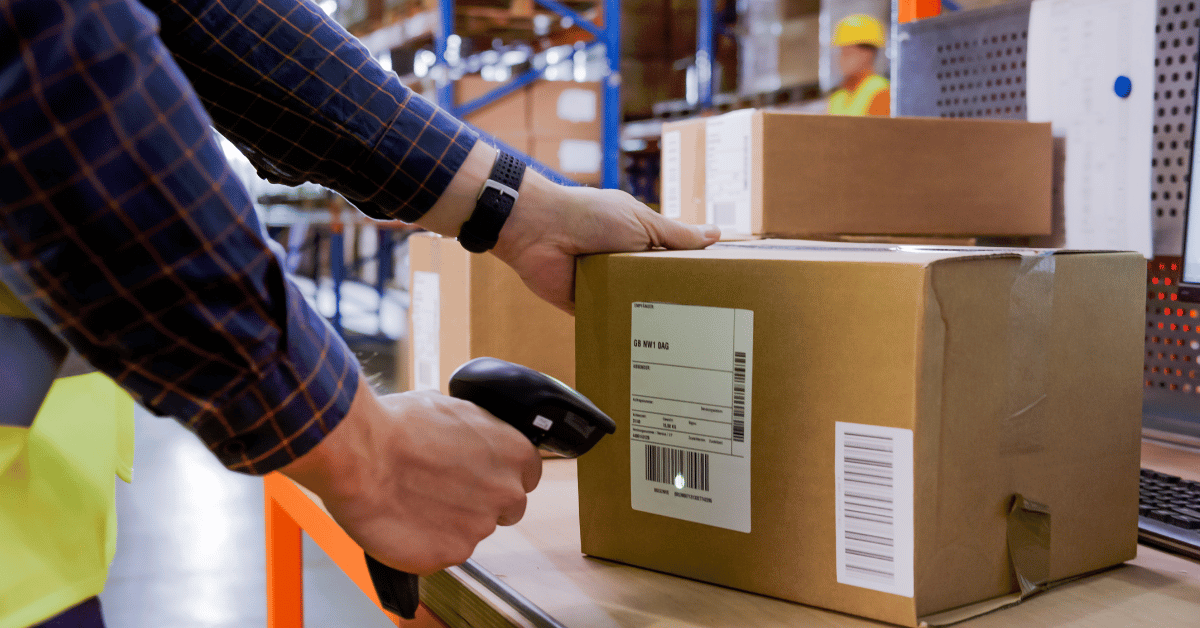
B2B fulfillment is the process of receiving, processing, packing, documenting, and shipping orders from one business to another. For fashion and apparel brands, that often means wholesale orders, retailer purchase orders, mixed-SKU cartons, EDI requirements, routing guides, delivery windows, and inventory allocation across both wholesale and direct-to-consumer channels.
This guide explains how B2B fulfillment works, how it differs from B2C fulfillment, what technology matters, and when a specialized 3PL can help your brand scale wholesale without creating inventory chaos.
What is B2B Fulfillment?
B2B fulfillment is the process of receiving, processing, and shipping wholesale orders to other businesses—like retailers, boutiques, or distribution partners—rather than directly to end consumers.
For fashion and apparel brands, B2B fulfillment typically involves:
- Larger order volumes shipped to retail partners and boutiques
- Mixed SKU pallets with multiple styles, sizes, and colorways
- EDI compliance requirements from major retailers
- Different shipping timelines based on retail delivery windows
- Complex pricing structures including wholesale rates, volume discounts, and NET terms
Unlike B2C fulfillment where you’re shipping individual orders to consumers, B2B fulfillment means managing purchase orders from retailers who will then resell your products.
B2B vs B2C Fulfillment: Key Differences
Understanding the distinction between B2B and B2C operations is critical when you’re running both channels simultaneously.
| Aspect | B2B Fulfillment | B2C Fulfillment |
|---|---|---|
| Order Size | Bulk orders (cases, dozens, pallets) | Individual items |
| Frequency | Seasonal or periodic reorders | Daily, continuous orders |
| Shipping | Freight/LTL to business locations | Parcel to residential addresses |
| Packaging | Wholesale cartons, minimal branding | Branded packaging, customer-facing |
| Lead Time | Days to weeks for delivery windows | Same-day to 3-day shipping expectations |
| Returns | Managed through wholesale agreements | Direct consumer returns portal |
| Pricing | Wholesale/NET terms pricing | Retail pricing |
| Technology | EDI integration, PO management | Shopping cart integration |
Most growing fashion brands operate both B2B and B2C channels. The challenge? These channels pull from the same inventory pool but require completely different fulfillment processes.
B2C fulfillment is usually optimized for individual customer experience: fast picking, branded packaging, parcel delivery, and simple returns. B2B fulfillment is optimized for retailer compliance: bulk quantities, carton rules, labeling, documentation, freight coordination, and delivery appointments. Brands that run both models need one inventory truth with two execution workflows.
How B2B Fulfillment Works: Step-by-Step
1. Purchase Order Receipt
Your retail partner sends a purchase order (PO) via EDI, email, or through platforms like Joor, NuOrder, or Brandboom. The PO specifies SKUs, quantities, delivery dates, and shipping destination.
2. Inventory Allocation
Your inventory management system reserves the ordered items from available stock, preventing overselling across all your sales channels.
3. Order Processing & Picking
Warehouse staff or 3PL partners pick items according to the PO. For apparel brands, this often means picking multiple sizes and colors per style.
4. Quality Control & Packing
Items are inspected, packed according to wholesale packaging requirements, and prepared for freight shipping. Many retailers have specific packing slip and labeling requirements.
5. Shipping & Freight Management
Orders ship via LTL freight, FTL, or parcel depending on order size. Tracking information is sent to the buyer and updated in your systems.
6. Invoice & Documentation
Commercial invoices, packing slips, and any required customs documentation (for international wholesale) are generated and sent to the buyer.
The Inventory Headache: Managing B2B and B2C Together
Here’s where most fashion brands hit a wall: disconnected inventory across channels.
The Problem:
- You sell 50 units through Shopify
- Your Joor account shows you have 100 units available
- A wholesale buyer orders 75 units
- Now you’re oversold by 25 units
- Angry retailers, lost revenue, damaged relationships
The Solution: Real-time inventory synchronization across all channels ensures that when a unit sells on your DTC site, it’s immediately unavailable for wholesale ordering. When a wholesale PO comes in, those units are instantly reserved and removed from your ecommerce availability.
Without centralized inventory management, you’re constantly choosing between:
- Overselling and disappointing customers
- Underselling and leaving money on the table
- Manually updating spreadsheets and drowning in administrative work
What Makes a Good B2B Fulfillment Solution?
Growing fashion brands need B2B fulfillment systems that check these boxes:
EDI Compliance
Electronic Data Interchange (EDI) allows you to receive and process purchase orders automatically from major retailers. EDI compliance is often non-negotiable for working with larger retail partners.
For major retailers, EDI is not optional. Your fulfillment setup should support purchase order intake, shipment confirmation, ASN timing, carton-level data, invoice documentation, and exception handling so retailer requirements are met consistently.
Multi-Channel Inventory Sync
Your B2B wholesale platform, DTC ecommerce store, marketplace channels, and dropship partners should all pull from one centralized inventory system with real-time updates.
Purchase Order Management
Track POs from receipt through fulfillment, manage delivery dates, monitor production timelines, and ensure you’re meeting retailer requirements.
Flexible Fulfillment Options
Whether you’re fulfilling in-house, using a 3PL, or managing a hybrid model, your system should adapt to your operations without forcing you into a specific warehouse setup.
Returns & Reverse Logistics
Wholesale returns are different from consumer returns. You need systems that handle defective merchandise, overstock returns, and seasonal buybacks efficiently.
Integration Ecosystem
Seamless connections to your wholesale B2B platforms (Joor, NuOrder, Brandboom), accounting software (QuickBooks), shipping tools (ShipStation), and ecommerce platforms (Shopify) eliminate manual data entry and errors.
B2B Fulfillment Technology: What You Actually Need
For fashion brands operating both B2B and B2C, your technology stack should include:
Inventory Management System Centralized hub that syncs stock levels across all channels in real-time. Starting at $750/month for multi-channel solutions built for fashion brands.
B2B Wholesale Platform Joor, NuOrder, or Brandboom for digital wholesale ordering that integrates with your inventory system.
Order Management Automatically route B2B orders to fulfillment, track status, and update buyers on shipping.
Warehouse Management (if needed) For brands doing in-house fulfillment or managing multiple warehouses, WMS optimizes picking, packing, and shipping operations.
Business Intelligence Visibility into which wholesale accounts are performing, what products are moving, and where your inventory sits across all locations.
Common B2B Fulfillment Challenges (And How to Solve Them)
Challenge 1: Split Shipments & Backorders
Problem: Part of a wholesale order is in stock, part is still in production.
Solution: Automated backorder management that fulfills available items immediately and ships remaining items when they arrive, with clear communication to buyers.
Challenge 2: Multiple Ship-To Locations
Problem: One wholesale buyer wants the same PO split across 5 different store locations.
Solution: PO splitting functionality that divides orders by destination while maintaining proper allocation and tracking.
Challenge 3: Seasonal Spikes
Problem: Pre-season wholesale orders flood in, overwhelming your current fulfillment capacity.
Solution: Scalable systems that handle volume spikes without requiring you to hire additional staff or scramble with manual processes.
Challenge 4: Retailer-Specific Requirements
Problem: Every major retailer has different labeling, packaging, and shipping requirements.
Solution: Configurable fulfillment rules that automatically apply the right requirements based on the buyer.
When to Use a 3PL for B2B Fulfillment
Consider outsourcing B2B fulfillment to a third-party logistics provider when:
- You lack warehouse space for bulk inventory storage
- Freight shipping and LTL logistics aren’t your core competency
- You’re expanding into new geographic markets
- You need to reduce fixed overhead costs
- You want to focus on design, marketing, and sales instead of operations
What to look for in a B2B 3PL:
- Experience with fashion and apparel fulfillment
- EDI capability and retail compliance knowledge
- Integration with your existing technology stack
- Flexibility for both B2B wholesale and B2C ecommerce
- Transparent pricing without hidden fees
Evolution Fulfillment’s B2B order fulfillment service is built for brands that need wholesale execution, retailer compliance, and multi-channel inventory coordination without adding more internal operational overhead. For apparel and lifestyle brands, the right 3PL should act as an extension of the team — not just a warehouse that ships cartons.
Making B2B Fulfillment Work at Scale
The brands that successfully scale both wholesale and DTC share one thing in common: they’ve eliminated the manual processes that create bottlenecks.
Instead of juggling spreadsheets, chasing inventory counts, and manually entering orders across systems, they’ve connected their sales channels into a centralized hub where:
- Inventory updates in real-time across all platforms
- Purchase orders flow automatically to fulfillment
- Retailers get tracking updates without manual intervention
- Returns process smoothly and get back in circulation quickly
- Business intelligence shows what’s working and what’s not
This isn’t about adding more staff to manage the chaos. It’s about implementing systems that let you scale revenue without scaling administrative overhead.
Getting Started with Better B2B Fulfillment
If you’re currently experiencing:
- Overselling or underselling across channels
- Time wasted updating inventory manually
- Retailers complaining about stockouts or shipping delays
- Difficulty tracking what inventory you actually have available
- Challenges scaling without hiring more operations staff
The solution starts with centralizing your inventory and order management. Whether you’re doing $500K or $15M in annual sales, disconnected systems create the same headaches—they just get more expensive as you grow.
If your current B2B process depends on manual updates, disconnected spreadsheets, or unclear inventory allocation, start by mapping your order flow from purchase order to delivery confirmation. Then compare that workflow against Evolution Fulfillment’s B2B order fulfillment capabilities to identify which steps should be systemized, outsourced, or improved before your next growth stage.
Next Steps:
- Audit your current B2B fulfillment process and identify manual touchpoints
- Map out all your sales channels (DTC, wholesale, marketplaces, dropship)
- Evaluate whether your current systems can sync inventory in real-time
- Consider whether in-house fulfillment or 3PL makes sense for your growth stage
- Look for technology solutions built specifically for fashion brands operating multiple channels
The right B2B fulfillment setup doesn’t just prevent problems—it unlocks growth by letting you confidently sell across every channel without worrying about inventory chaos on the backend.
FAQ: B2B Fulfillment
What is B2B fulfillment?
B2B fulfillment is the process of shipping orders from one business to another, such as a brand shipping wholesale inventory to retailers, boutiques, distributors, or marketplace partners.
How is B2B fulfillment different from B2C fulfillment?
B2B fulfillment usually involves larger orders, retailer compliance, carton labeling, EDI/ASN requirements, freight coordination, and delivery windows. B2C fulfillment focuses on individual consumer orders, branded packaging, parcel delivery, and customer-facing returns.
When should an apparel brand use a 3PL for B2B fulfillment?
An apparel brand should consider a 3PL when wholesale volume, EDI requirements, retailer routing guides, inventory allocation, or freight coordination become too complex to manage manually in-house.
What’s the difference between B2B and B2C apparel fulfillment?
B2B apparel fulfillment ships bulk, mixed-SKU orders to retail partners and boutiques under retailer compliance rules — carton labeling, EDI, routing guides, and delivery windows. B2C apparel fulfillment ships individual orders directly to consumers, prioritizing branded packaging, fast turnaround, and a simple returns process. Brands running both need one inventory system feeding two different execution workflows.
Which fulfillment companies understand B2B order patterns and wholesale shipping?
Look for a 3PL with direct experience in retailer compliance — EDI/ASN handling, routing guide adherence, and carton/pallet labeling to buyer specs — rather than general warehousing experience alone. Ask for client references specifically in wholesale or apparel, since generic fulfillment experience doesn’t always translate to retailer compliance accuracy.
