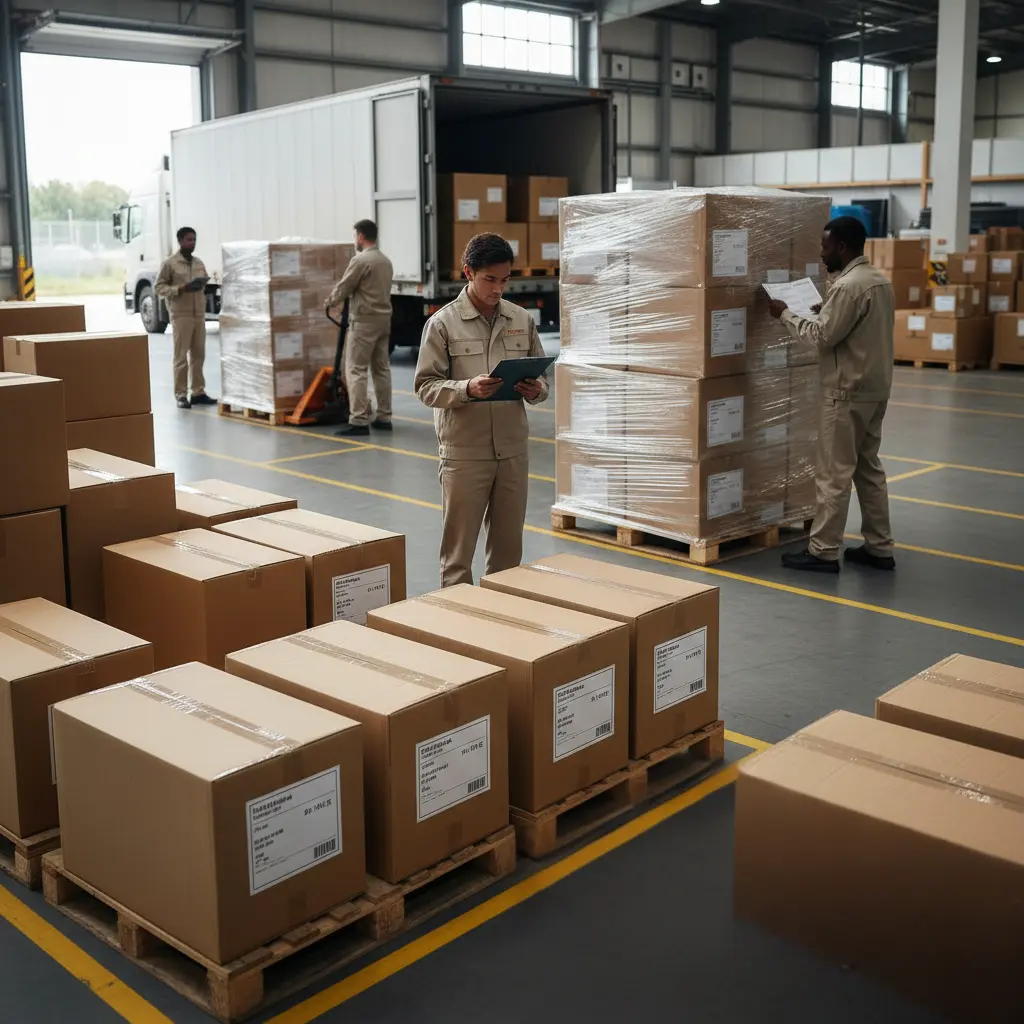
What is cross border shipping? It means sending products from one country to another. For Canadian brands, it usually means shipping orders to customers in the United States. For American brands, it means the opposite—getting products into Canadian customers’ hands.
Sounds simple? It’s not. Cross-border shipping meaning includes customs forms, duty fees, longer delivery times, and costs that can destroy your profits. According to Statistics Canada, Canadian businesses shipped $31.4 billion in goods internationally through ecommerce business channels in 2023. 76% went to the U.S. That’s a huge opportunity—but only if you can ship efficiently.
This guide breaks down exactly how cross border logistics works, what it costs, and how growing brands can succeed without losing money or international customers.
How Cross-Border Shipping Actually Works
Domestic shipping is straightforward. Print a label, drop off the package, it arrives in days. Cross-border shipping adds several extra steps.
Export documentation: Before your package crosses international borders, you need shipping documents. The commercial invoice tells customs officials what’s in the box, its value, country of origin, and materials. You’ll also classify products using HS codes—an international numbering system for every product type. Get the code wrong, and your shipment gets delayed. These documentation requirements are critical for customs compliance.
Customs clearance: Your package arrives at a customs facility. U.S. Customs and Border Protection inspects paperwork and sometimes the product. They verify forms are correct, values are accurate, and products meet safety standards. The customs process takes anywhere from hours to several days, depending on how busy border crossings are.
Duty and tax assessment: Customs brokers calculate recipient fees: import duties (0-32% depending on product), brokerage fees ($50-150 per shipment), and sales tax. A $100 dress from Canada to California might trigger $92 in additional fees.
Final delivery: Once customs releases the package and fees are paid, local carriers deliver to your customer. Total transit time: 7-10 business days versus 2-4 days for domestic shipping.
Why Cross-Border Shipping Costs More
The price difference between domestic and cross-border shocks most new brands.
International carrier rates: Shipping companies charge premium rates for cross-border service. A 2-pound package from Toronto to Buffalo costs 40-60% more than Toronto to Montreal—even though Buffalo is closer. Carriers price international shipments higher because they require more handling and coordination.
Customs brokerage fees: Someone prepares and submits customs paperwork. Standard brokerage fees range from $50-150 per shipment regardless of size. For a $50 order, these fees can exceed product cost.
Duties and tariffs: Import duties vary based on what you’re shipping and where it was made. USMCA eliminated most tariffs between Canada, U.S., and Mexico for qualifying goods. But you need certificates of origin proving products qualify. Non-qualifying items still face duties. According to U.S. International Trade Commission data, apparel duties range from 5% for basic cotton items to 32% for certain wool garments.
Returns cost double: Domestic returns require one shipping charge. Cross-border returns require two—once to send back, and customs processing in both directions. This doubles costs and extends timelines from days to weeks.
Hidden Challenges
Beyond costs, cross-border shipping creates operational headaches that hurt customer experience.
Unpredictable delivery times: You can’t promise specific dates. Customs delays are random. A package might clear in 6 hours or sit for 6 days. This uncertainty makes guaranteed delivery impossible.
Surprise fees destroy conversions: Research shows 64% of online shoppers abandon purchases when surprise fees appear. Imagine ordering a $100 dress that arrives with a driver demanding $85 in unexpected fees. Many customers refuse delivery and dispute charges.
Complicated tax rules: Different states and provinces have different tax rules. Some U.S. states charge no sales tax. Others charge 10%. Keeping track across 50 states or 13 provinces becomes a full-time job.
Regulatory barriers: Product labeling requirements differ between countries. Care instructions and safety warnings that meet Canadian standards might not satisfy U.S. customs regulations. These differences require different product versions for different markets.
Cost Effective Solutions
Smart brands use specific strategies to serve the international market profitably.
Domesticated Shipping
The most effective solution is cross-border domesticated shipping. Instead of shipping individual orders across borders, store inventory in a warehouse on the other side.
A Canadian brand stores products at a U.S. fulfillment center. When American customers order, products ship domestically within the United States—no customs delays, no brokerage fees, no surprise charges. You deal with customs once when moving bulk inventory.
This model reduces costs by 35-50% and cuts delivery times from 7-10 days to 2-4 days. Customers get domestic tracking and predictable delivery.
Partner With Specialists
Working with a 3PL provider specializing in cross-border operations eliminates headaches. Experienced partners handle customs documentation, maintain customs bonds, navigate customs regulations, negotiate better carrier rates, and manage inventory across locations.
For fashion brands, look for partners who understand textile classifications and country of origin requirements.
Show Total Costs Upfront
Landed cost means the total price customers pay including product, shipping, duties, taxes, and fees. Show this total during checkout. Transparency prevents surprise fees that destroy trust.
Many e-commerce platforms offer landed cost calculation apps that automatically compute duties and taxes.
Common Mistakes to Avoid
Underestimating customs compliance: Incorrect HS codes or missing certificates of origin trigger audits and fines. Invest time learning procedures or partner with experts.
Promising specific delivery dates: Never promise dates for cross-border shipments unless using domesticated shipping. Promise windows: “7-10 business days.”
Choosing only on price: The cheapest shipping often delivers the worst experience. Evaluate carriers on reliability and tracking—not just price.
Not testing experience: Ship yourself a test order before launching. Experience what your customers experience.
Is Cross-Border Worth It?
Cross-border shipping makes sense when opportunity outweighs complexity:
Real demand across the border? Look at where website traffic and social media followers come from.
Margins support higher costs? Products with 40%+ markup can absorb cross-border costs. Low-margin products often can’t compete.
Minimum volume? Domesticated shipping works best with 100+ monthly orders to a region.
For brands answering yes, cross-border shipping opens massive growth opportunities. The U.S. market is 10 times larger than Canada’s.
Making It Work
Brands that succeed treat international shipping as a strategic advantage. They invest in infrastructure—warehouse space across borders, partnerships with experienced 3PL providers, or technology that automates compliance. They prioritize customer experience. They start smart: test one market, learn the process, solve problems at small scale, then expand.
Ready to eliminate cross-border shipping headaches? Evolution Fulfillment operates fulfillment centers in Delta, BC and Huntington Beach, CA. Our cross-border shipping solutions have helped fashion brands reduce shipping costs by up to 50% while delivering faster service to customers on both sides of the border.
The opportunity is there. Smart cross-border shipping is how you capture it. With the right 3PL partner, you’ll optimize your supply chain and serve international customers profitably.
