
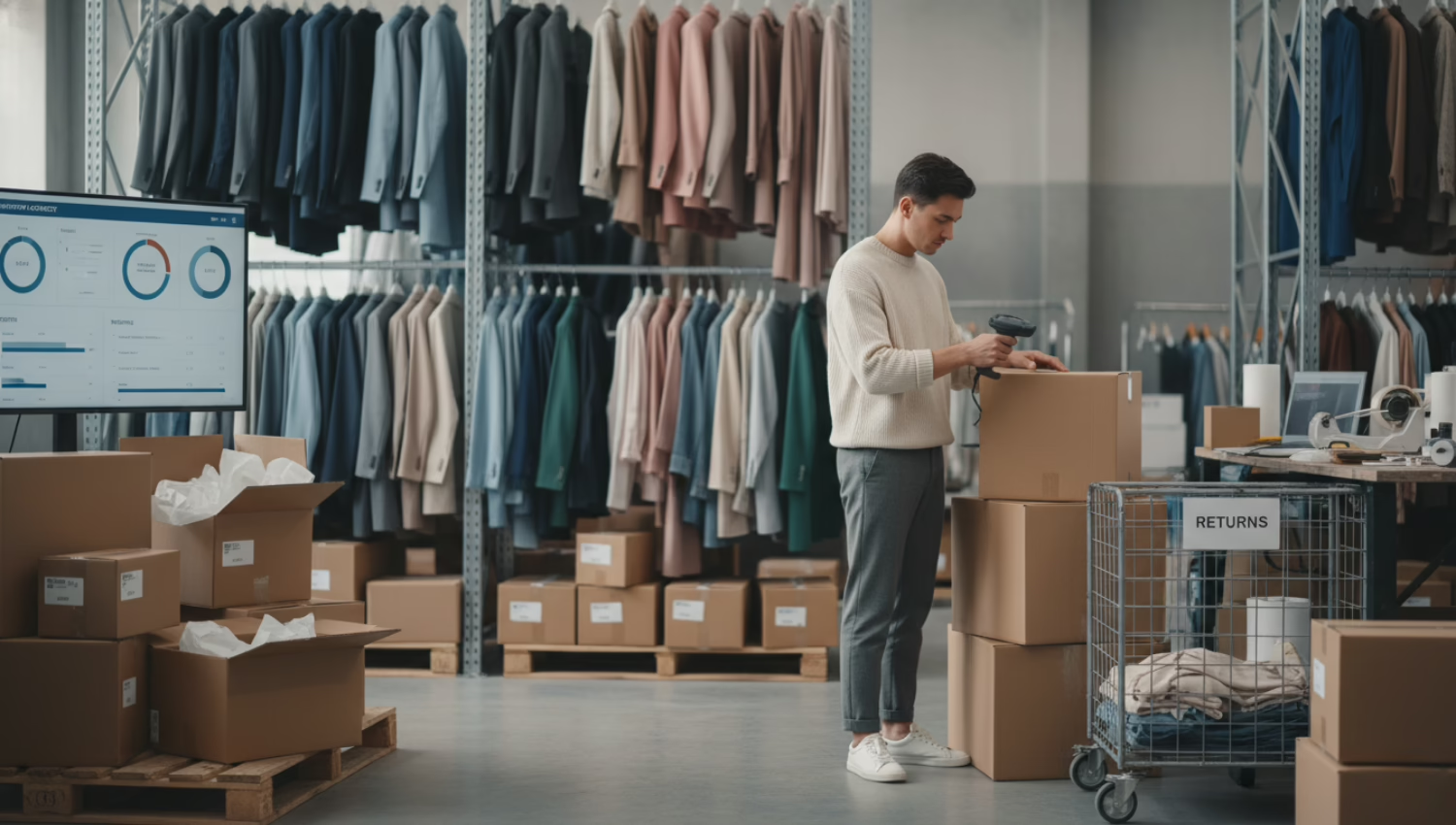
Fashion moves fast. One viral TikTok, a surprise weather shift, or a celebrity wearing the right piece can change your entire demand curve overnight. Meanwhile, your supply chain is still juggling size curves, fabric lead times, retail routing guides, and return rates that sometimes feel… personal.
If you’ve ever wondered, “What is the meaning of fashion logistics?” — here’s the truth:
Fashion logistics is the choreography behind the scenes. It’s the system that makes sure your designs land in the right warehouse, in the right condition, at the right moment — and get picked, packed, shipped, returned, refurbished, or resold without eroding your margins or your brand perception.
This guide breaks down how fashion brands actually scale:
• how apparel logistics differs from general logistics
• how to choose between Brand Fulfillment, traditional 3PL, or hybrid
• how cross-border strategies shape US–Canada growth
• how to design returns-heavy workflows
• how tech (RFID, WMS/OMS, analytics) creates visibility and accuracy
• and how to turn all of this into a predictable, margin-protecting operation
Let’s walk through the real playbook used by brands that win.
A Smarter Way to Think About Fashion Logistics (Not Just Trucks + Warehouses)
Fashion logistics is the end-to-end movement of apparel:
design → sourcing → production → inbound QC → warehousing → picking → shipping → delivery → returns → resale or restock.
This is NOT general logistics.
Fashion has its own rules — size/fit variants, constant seasonality, capsule drops, and the reverse logistics that follow. Return rates of 20–40% aren’t a failure; they’re the norm.
That’s why fashion fulfillment needs a model built for:
• rapid SKU turnover
• weekly style drops
• brand-safe unboxing
• fast exchanges
• accurate inventory for omnichannel
• and a returns engine that doesn’t drain your margin
In short: apparel logistics is margin protection disguised as operations.
The Real Difference Between Fashion Logistics and “Regular” Logistics
If a logistics partner treats dresses like electronics or jeans like barcodes, your brand will bleed:
- SKU explosion: One style becomes 6–12 SKUs instantly
• Seasonality pressure: Lead time compression for drops
• Retail compliance: EDI 856s, UCC-128 labels, delivery windows
• Return rates: A logistics reality, not a customer flaw
• Presentation: Ticketing, steaming, kitting, tissue wrapping
This is why brands switch to apparel logistics models as soon as scale hits.
How Fashion Fulfillment Actually Works (And Where It Breaks)
Fashion fulfillment must work across ALL channels:
Wholesale (B2B)
Routing guides, booking windows, EDI compliance — or you get fined.
DTC (B2C)
2-day delivery expectations, branded unboxing, split shipments for exchanges.
Marketplaces (Amazon, Walmart, Zalando)
FBA/FBM workflows, cartonization rules, and strict prep standards.
When apparel brands mix channels without the right systems, that’s when returns balloon, inventory accuracy collapses, and margins shrink.
Choose the Fulfillment Model That Matches Your Brand’s Reality
There are three real options:
1. Brand Fulfillment Model (best for fashion brands who care about CX)
A 3PL operating as your dedicated ops team — white-glove lanes, custom packaging, and deep tech integrations. Ideal when you want control and consistency.
2. Traditional 3PL (best for cost-efficiency and scale)
Shared labor, shared automation, cross-channel reach. Not great for brands needing strict size/fit rules or high-touch packaging.
3. Hybrid Model (best for mid-sized brands scaling fast)
White-glove DTC + standardized wholesale lanes. Personalization where it matters, efficiency where it counts.
Your ideal model depends on SKU complexity, monthly orders, and margin per order.
The Tech Stack That Makes or Breaks Apparel Logistics
Fashion logistics dies without real-time data. Your tech stack must include:
- OMS for routing and order logic
• WMS for bin-level accuracy
• ERP for financial data and planning
• RFID for near-perfect inventory accuracy
• BI tools for forecasting and exception alerts
When your ERP ↔ OMS ↔ WMS share real-time data, oversells drop, stockouts shrink, and pick accuracy shoots past 99%.
Cross-Border Logistics for North America (The Part Most Fashion Brands Get Wrong)
For brands expanding between Canada and the US, cross-border mistakes get expensive fast.
Winning brands use domestication — shipping bulk into a US warehouse first, then fulfilling from inside the country.
Benefits:
- 1–3 day faster shipping
• predictable landed costs
• fewer duty surprises
• smoother returns flows
• stronger CX for US consumers
If you sell from Canada to the US, Section 321 is your best friend for qualifying orders (duty-free up to $800 USD).
Returns & Reverse Logistics: The Heart of Fashion Ops
Returns aren’t a problem. They’re a value stream — if designed correctly.
A returns engine must include:
- intake with photos
• grading (A/B/C)
• steaming/repair/refurbishment
• restocking/resale/B-stock channels
• rapid refund/exchange workflows
The goal:
turn 20–40% return rates into 60–75% value recovery, not endless cost.
The KPIs That Tell You If Your Fashion Logistics Actually Works
Top targets:
- On-time ship: ≥98%
• Pick accuracy: 99.8%+
• Inventory accuracy: ≥97%
• Dock-to-stock: <48 hours
• Return recovery: ≥70% goal
• Order cycle time: <24 hours
If your partner can’t show these numbers weekly, they’re guessing — and you’re paying for the guess.
The NA Expansion Blueprint (Systems + Cross-Border + Right Model)
To scale fashion fulfillment in North America, you need:
- integrated systems (ERP/OMS/WMS/RFID)
- domestic US/Canadian inventory for speed
- a hybrid or Brand Fulfillment model
- returns triage that protects resale value
This is how apparel brands get 1–3 day delivery, protect margin, reduce duties, and retain customers through smarter reverse logistics.
Wrapping Up
Fashion logistics isn’t about managing chaos — it’s about designing a system that absorbs it.
When you combine real-time data, the right fulfillment model, cross-border strategy, and a returns engine that actually recovers value, you get what most apparel brands are chasing:
more predictable costs, more consistent CX, and more margin left over.
If you’re ready to turn your logistics into a competitive advantage, Explore a specialist apparel fulfillment solution and run a pilot that proves real-world ROI: