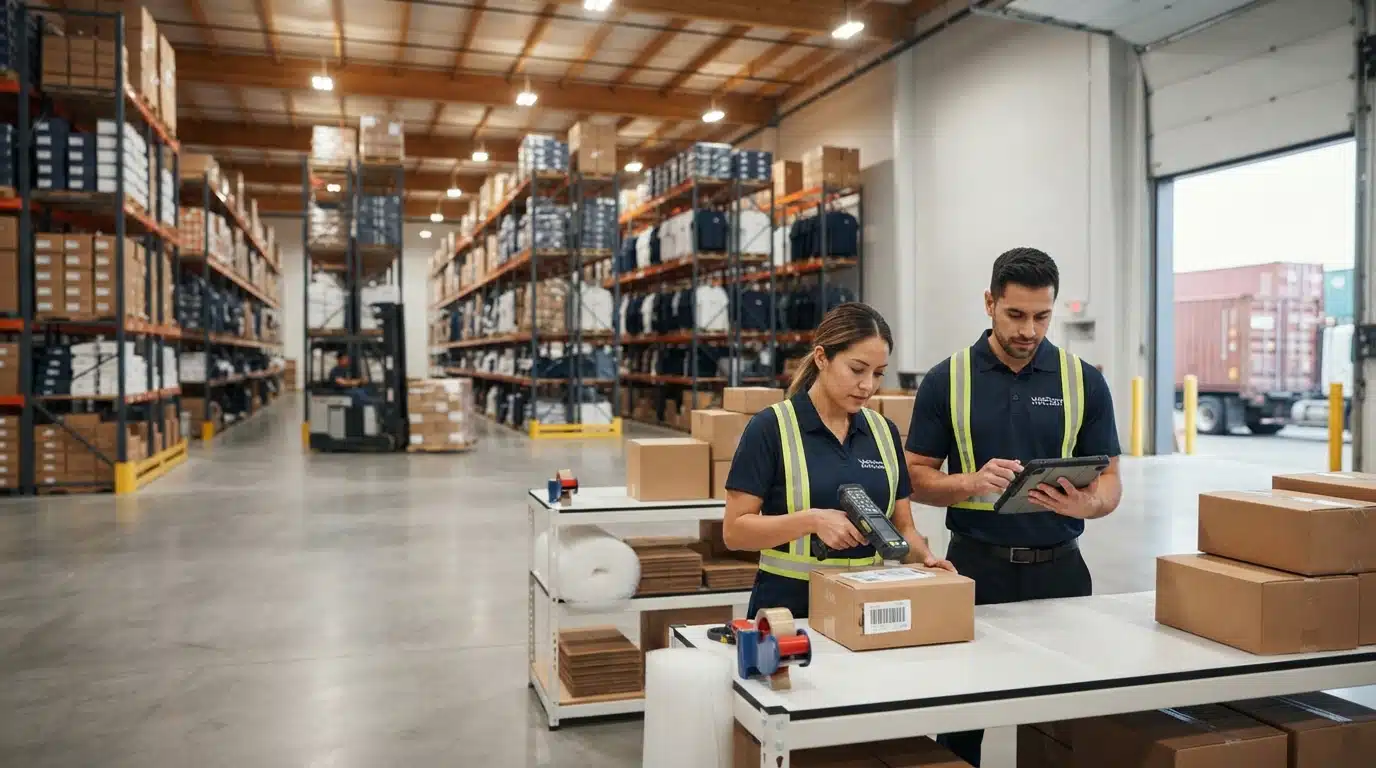
A warehouse can store inventory and ship orders. A full-service 3PL should do more. For growing brands, the difference shows up when one partner can support ecommerce, wholesale, Amazon, returns, storage, integrations, reporting, and account-level problem solving without forcing the brand to stitch operations together by hand.
Brands searching for a full-service 3pl provider vancouver are usually past the point where basic storage is enough. They need a fulfillment partner that can keep pace with channel complexity, seasonal demand, retailer rules, and North American growth.
Full-service means the operating model is wider than the warehouse
A narrow warehouse vendor receives goods, stores cartons, picks orders, and ships parcels. That may work for a single-channel business with simple SKUs. It becomes limiting when a brand sells through Shopify, Amazon, boutiques, major retailers, wholesale distributors, and seasonal campaigns.
A full-service provider connects the work across functions:
- Receiving and putaway
- Inventory visibility
- B2C pick and pack
- B2B order fulfillment
- Amazon prep and marketplace support
- Returns intake and inspection
- Value-added services such as kitting and labeling
- Cross-docking and pallet movement
- Reporting and account communication
- Administrative support tied to fulfillment operations
Evolution’s fulfillment services are built around this wider model, so brands can treat fulfillment as a growth system rather than a collection of warehouse tasks.
Vancouver location matters when it supports the right network
Vancouver has practical advantages for brands serving Canada, the United States, and Pacific trade lanes. Proximity to port activity, western Canadian customers, and cross-border routes can help brands design smarter inventory flows. Location alone is not enough, though.
A Vancouver 3PL should be able to explain how its facilities, carrier relationships, technology, and process controls support the brand’s actual order mix. For one apparel brand, that may mean storing replenishment inventory near Canadian DTC demand while building a cross-border plan for US customers. For a housewares distributor, it may mean receiving containers, breaking down pallets, and moving wholesale orders with clear appointment timing.
Facility proof matters. Brands should review the provider’s warehouse footprint, service mix, and account model. Evolution’s warehouse locations give buyers a starting point for understanding where inventory is handled and how the network supports North American fulfillment.
Integrations decide how much manual work remains
A 3PL can have a good warehouse team and still create problems if systems are not connected. Manual order files, delayed inventory updates, and spreadsheet-based exceptions create risk as volume grows.
A full-service provider should connect with the platforms the brand uses every day: ecommerce, marketplaces, ERP, wholesale order systems, and reporting tools. The goal is straightforward: orders flow in, inventory updates return, tracking moves back to the selling channel, and exceptions are visible before they become customer issues.
Ask these questions early:
- Which ecommerce and marketplace platforms can be connected?
- How often does inventory update?
- Can B2B and B2C orders be handled from the same inventory base?
- How are backorders, holds, and substitutions managed?
- What reports show shipped orders, errors, returns, and inventory status?
- Who owns integration fixes when something breaks?
For a brand shipping 3,000 DTC orders and 600 wholesale cartons in a month, even small data delays can create oversells, missed ship windows, or duplicate customer support work.
B2C, B2B, and Amazon each need different fulfillment rules
One sign of a mature full-service 3PL is the ability to support different channels without treating them all like the same order type.
B2C orders usually focus on speed, branded presentation, carrier selection, tracking, and customer-friendly returns. B2B orders may require case picks, palletization, EDI, ASN workflows, routing guides, carton labels, and appointment scheduling. Amazon work may require FBA prep, labeling, carton requirements, or FBM pick and pack.
A provider that only understands small-parcel ecommerce may struggle with wholesale. A provider that only understands pallet movement may struggle with DTC customer experience. Established brands need both.
Evolution’s warehouse in Canada supports storage and inventory visibility, while its Amazon fulfillment service helps brands manage marketplace-specific workflows as part of a broader channel plan.
Returns are part of the service, not an afterthought
Returns can drain margin when they are slow, unclear, or disconnected from inventory. A full-service 3PL should have a defined reverse logistics process, especially for apparel, footwear, cosmetics, jewelry, and lifestyle products where condition matters.
A returned jacket may be sellable, missing tags, worn, damaged, or outside policy. A returned beauty product may need a different decision path. The warehouse should inspect, grade, update inventory status, and report exceptions based on the brand’s rules.
For growing brands, the return process should answer:
- How quickly are returns received and inspected?
- What condition categories are used?
- When does inventory become available for resale?
- Which returns are held for brand review?
- How are customer service notes shared?
- What reporting shows reasons, volume, and recovery rate?
Treating returns as a core service helps brands protect margin and customer trust, especially during peak seasons.
Full-service should include account support and problem solving
Operational problems are unavoidable. Shipments arrive short. Retailers change requirements. A platform sync fails. A promotion sells faster than forecast. The question is whether the 3PL has a service model that helps solve the issue quickly.
For Evolution, white-glove service means the relationship is active. Brands should expect communication, escalation paths, reporting, and process review. The provider should be able to discuss SKU changes, forecast shifts, channel priorities, and upcoming campaigns before they hit the warehouse floor.
This is different from a ticket-only warehouse model. Established brands need a partner that understands the business impact of operational decisions.
What to verify before choosing a Vancouver 3PL
Use a practical checklist before signing with any provider:
| Area to verify | What to ask |
|---|---|
| Facilities | Where is inventory stored and handled? |
| Channel support | Can the team handle DTC, wholesale, Amazon, and returns? |
| Technology | Which systems integrate, and how is data updated? |
| Accuracy controls | How are receiving, picking, packing, and cycle counts checked? |
| Retail readiness | Can the provider handle routing guides, labels, ASNs, and appointments? |
| Service model | Who manages the account and escalations? |
| Reporting | What will leadership see each week or month? |
| Growth fit | Can the provider support volume swings and new channels? |
If the answers stay vague, keep asking. Fulfillment problems are expensive to fix after inventory has already moved.
How Evolution’s Brand Fulfillment Model fits full-service 3PL needs
Evolution’s Brand Fulfillment Model is designed for brands that want more control than a traditional distribution path may offer. The idea is to act as an extension of the client’s team, combining operational execution with brand-aware service and North American growth support.
That matters for apparel, fashion, cosmetics, lifestyle products, housewares, pet products, jewelry, and small luxury goods. These categories often need careful handling, multi-channel allocation, branded packaging, returns discipline, and wholesale readiness.
Evolution is also part of the broader Vancouver 3PL market. If your team is comparing options, the guide to top 3PL companies in Vancouver can help frame the search. This article is different: it focuses on what “full-service” should mean before you choose a partner.
Talk to Evolution about your channel mix
A full-service 3PL provider should help your brand reduce operational friction, not add another layer of management. The right partner gives you inventory visibility, channel-specific execution, clear reporting, and a service team that understands growth pressure.
If your brand is expanding across ecommerce, wholesale, Amazon, and North American markets, request a fulfillment strategy call with Evolution. Bring your monthly order volume, SKU count, channel mix, return profile, and growth plans. The conversation should help you decide whether Evolution is the right long-term fit for your next stage.