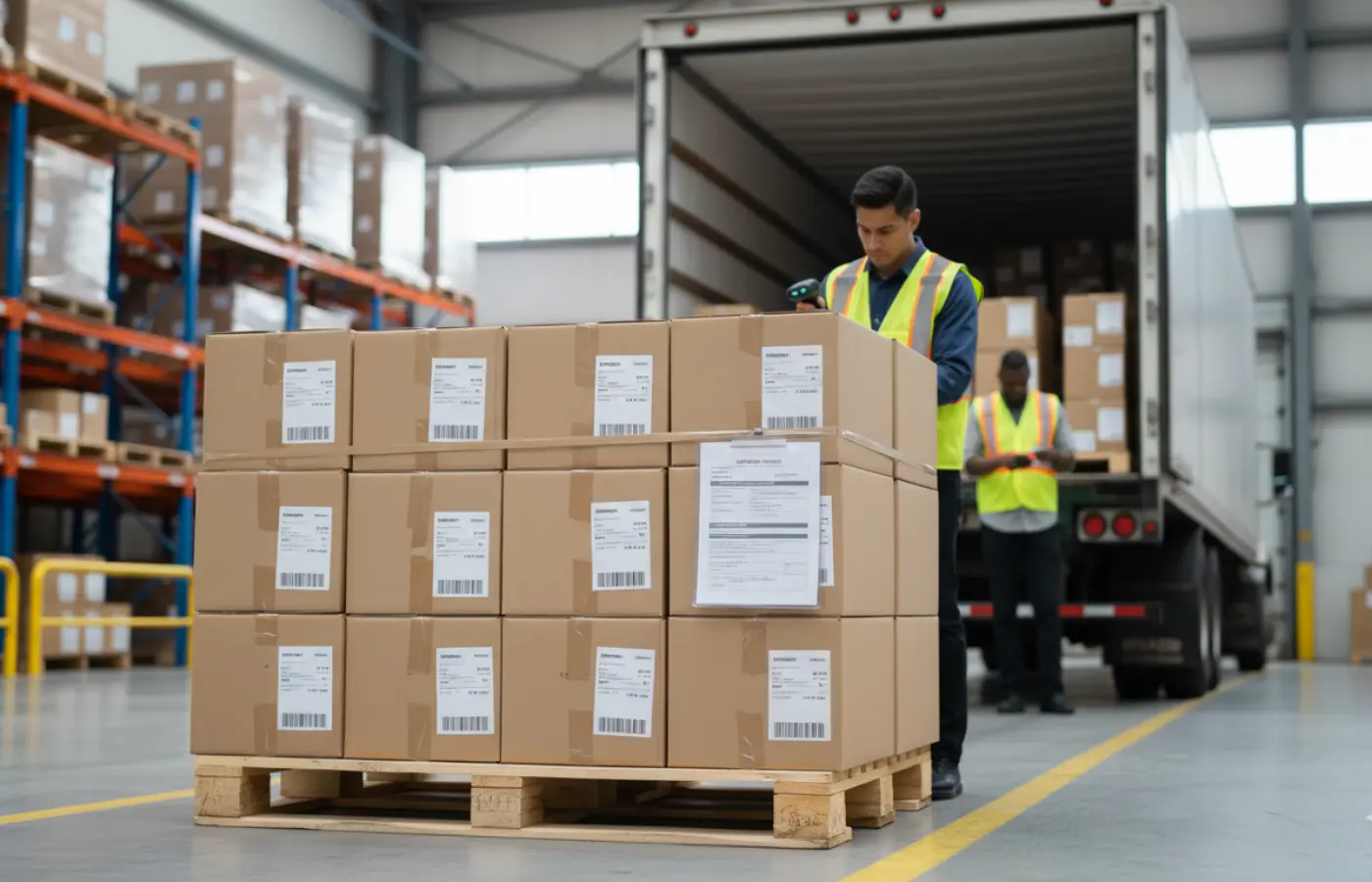
Selling to customers in the United States is a big opportunity for Canadian brands. But cross-border shipping adds real complexity. Duties, customs clearance, and carrier selection all affect your margin and your customer experience.
This guide covers what you need to know to ship from Canada to the US at scale — without the costly surprises.
How Cross-Border Shipping Works
Every shipment follows the same basic steps. You pick, pack, and assign customs data. The carrier moves the parcel to the border. US Customs and Border Protection (CBP) reviews the shipment. Then it moves to final delivery in the United States.
Where brands run into trouble is treating this like domestic shipping with an extra step. It is not. Cross-border shipping is a compliance workflow and a transportation workflow at the same time.
For growing brands, the operating model should define who owns product classification, customs data, duty calculation, carrier selection, exception handling, and returns. If those responsibilities are unclear, cross-border shipping becomes reactive and expensive as volume increases.
Understanding Duties and Taxes
Duties and taxes are driven by product classification, declared value, origin, admissibility, and the delivery model you choose. Treat this data as part of your fulfillment workflow, not as an afterthought added at label creation.
HS Codes
Every product you ship needs a Harmonized System (HS) code. This code tells customs how to classify your goods and what duty rates apply. Wrong HS codes can mean overpaying duties, customs holds, or penalties. Build a clean HS code library for your top SKUs and review it regularly.
De Minimis and Duty-Free Thresholds
The United States allows many low-value shipments to enter duty-free under de minimis rules. The threshold is commonly referenced as USD $800 for qualifying imports. This matters a lot for DTC parcel strategy. However, rules can change. Always validate current thresholds with your customs broker rather than building your entire cost model around one assumption.
Section 321
Section 321 is a US customs provision that can allow certain low-value shipments to enter the United States duty-free. It is not a loophole. It requires accurate valuation, proper product admissibility checks, and documented processes. Treat it as an operating lane with governance.
Trade Agreements: USMCA/CUSMA
The USMCA trade agreement (called CUSMA in Canada) can reduce or eliminate duties on qualifying goods. Eligibility depends on the product and where its materials come from. Many brands either miss these savings or claim them incorrectly. Get an origin analysis done for your top SKUs.
DDP vs DDU: Which Model is Right for You?
These terms define who pays duties and taxes — you or your customer.
With DDP (Delivered Duty Paid), you collect and pay the duties upfront. Your customer gets a clean delivery with no surprise charges. This reduces cart abandonment and improves customer satisfaction. It is the better fit for most DTC brands.
With DDU/DAP (Delivered at Place), your customer pays duties and taxes upon delivery. This can work for wholesale or low-margin categories. But it increases the risk of refused deliveries and higher support costs.
Model both options by channel before deciding on a global policy.
Getting Customs Documentation Right
A complete commercial invoice is required for every cross-border shipment. It must include a detailed description of the goods, quantity, value, HS code, country of origin, Incoterm, and reason for export. Vague descriptions like ‘apparel’ or ‘gift item’ cause delays. Customs and border protection needs commercially specific detail.
If you are claiming USMCA preference, you also need a statement or certificate of origin with supporting records. Some product categories — like cosmetics — may require additional documentation for admissibility.
Shipping Costs: Where Margin Quietly Disappears
The shipping label cost is just one part of your total cross-border expense. A realistic cost model includes:
- Base transportation rates
- Duty taxes based on HS classification and declared value
- Brokerage and customs clearance fees
- Fuel surcharges and accessorial fees
- Dimensional weight charges
- Returns and reverse logistics costs
To protect margin, audit your top SKUs for HS code accuracy, re-engineer packaging to reduce dimensional weight, and use rules-based carrier routing rather than a single carrier for everything.
Also review the cost of failed delivery promises. A cheaper lane can become more expensive if it creates more customer service tickets, refused packages, slow returns, or replacement shipments. The best cross-border cost model balances freight savings with customer experience and inventory recovery.
Common Mistakes to Avoid
- Wrong HS codes on high-volume SKUs — review classification quarterly
- Incomplete commercial invoices — treat customs data as a controlled dataset
- Undervaluing shipments to reduce duty taxes — this creates compliance risk
- Ignoring returns — cross-border returns can wipe out your contribution margin
- Building your model around a single de minimis policy that may change
When to Work with a 3PL
At lower volumes, you can manage cross-border shipping with internal workflows. As order volume grows, that approach usually breaks. A good 3PL partner helps you design a repeatable operating model — covering customs compliance, carrier routing, and customer experience — not just print shipping labels.
Signs you may be ready for a 3PL-led model: customs exceptions are recurring, your team spends too much time on duty-related support tickets, or US growth feels capped by operational friction.
A cross-border 3PL should be able to help standardize SKU data, coordinate customs documentation, support carrier-routing rules, manage returns, and give your team visibility into exceptions. For brands selling through both ecommerce and wholesale channels, that structure can protect margin while keeping delivery promises consistent.
Next Step: Evaluate Your Current Setup
Start with three concrete actions this week:
- Pull your last 90 days of US orders and calculate total duty taxes plus brokerage by SKU
- Review where you apply DDP vs DDU by channel and compare delivery completion rates
- Audit your top 20 SKUs for HS code and origin accuracy
Then map those findings to your 2026 margin targets. If you want to compare operating models, review Evolution Fulfillment’s Cross-Border Domesticated Shipping service, then bring your SKU data, recent U.S. order history, duty/brokerage costs, and current carrier mix to a strategy discussion. That gives the team enough detail to identify where margin, compliance, and customer experience are most exposed.
FAQ: Cross-Border Shipping from Canada to the US
What is cross-border shipping from Canada to the US?
Cross-border shipping from Canada to the US is the process of moving goods through Canadian fulfillment, U.S. customs review, and final U.S. delivery. It requires accurate product data, customs documentation, carrier routing, and a clear duty/tax model.
Is DDP or DDU better for ecommerce brands?
DDP is often better for ecommerce brands because customers pay duties and taxes upfront and avoid surprise delivery charges. DDU or DAP can work in some wholesale or low-margin situations, but it can increase refused deliveries and customer support costs.
When should a brand use a 3PL for Canada-to-US shipping?
A brand should consider a 3PL when customs exceptions, duty questions, carrier complexity, returns, or U.S. growth volume are taking too much internal time. A 3PL can help standardize the operating model and reduce cross-border friction.
