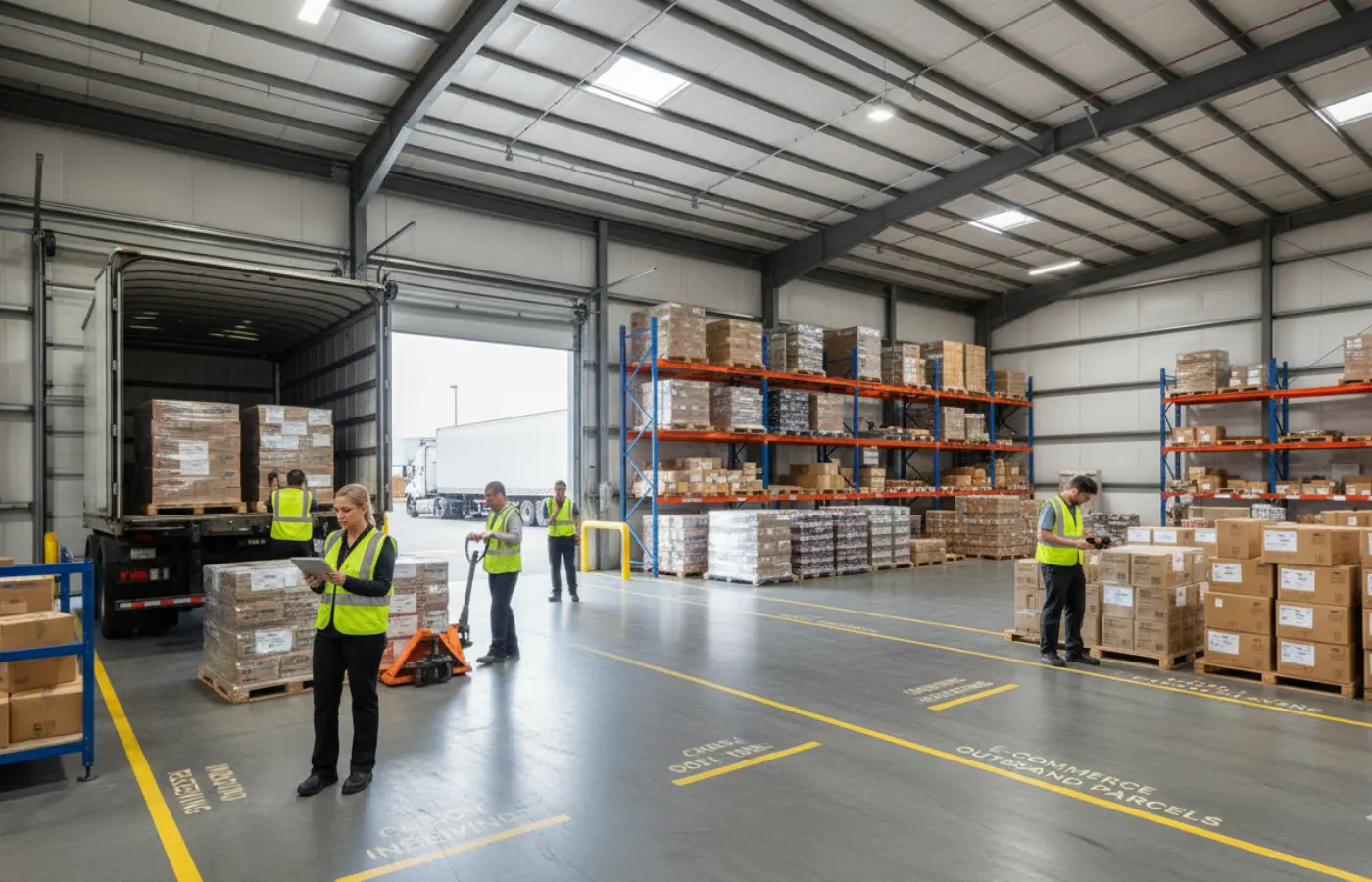
If you are evaluating warehousing in Vancouver, you are probably balancing two competing pressures at once: move faster, but protect margin. For brands in the $5M to $20M range, warehousing is no longer just about available pallet space. It is about choosing an operating partner who can handle channel complexity, maintain tight service levels, and support growth without adding friction.
This guide breaks down what to look for in Vancouver warehousing, what SLA numbers are realistic, how pricing is usually structured, and why so many operators shortlist Delta, BC first.
What “good” warehousing in Vancouver actually means in 2026
At a basic level, a warehouse in Vancouver stores inventory and ships orders. That is table stakes. The real difference between providers shows up in operational discipline.
A strong 3PL warehousing Vancouver partner should give you:
- predictable intake and putaway timelines
- accurate inventory visibility by channel
- fast pick-pack performance during normal and peak periods
- compliance support for wholesale and marketplace orders
- clear exception handling when things go wrong
If a provider can only describe square footage, racking, and truck access, you are not seeing the full operating picture yet.
For brands running wholesale, DTC, and Amazon simultaneously, warehouse performance directly affects customer experience, chargebacks, and cash conversion speed.
Why Delta BC is the strategic sweet spot for Vancouver warehousing
Many brands start with “warehouse Vancouver” in their search, but the practical decision often comes down to network design in Greater Vancouver. Delta, BC is frequently preferred because it combines port access, drayage practicality, and strong distribution positioning.
1) Port and container flow advantages
Delta sits close to key freight corridors tied to Pacific import flows. That matters when your products arrive in mixed container profiles and need fast deconsolidation or transload support. Lower friction between inbound transport and receiving windows can reduce idle time and demurrage exposure.
2) Better drayage and transfer efficiency
Drayage cost volatility can quietly eat margin. Facilities in Delta often improve coordination between container pickup, unloading, and inventory receipt. Over time, small handling efficiencies produce meaningful savings at scale.
3) Last-mile zone coverage across Metro Vancouver
For DTC brands, delivery speed is not only a carrier issue. It starts with where inventory is staged. A Delta-based warehouse can support efficient zone reach into Metro Vancouver and onward Western Canada routing.
4) Multi-channel resilience
Delta-area operations are often built for mixed B2B and B2C flows, which helps if you run retailer replenishment and ecommerce in the same network. That flexibility becomes critical during seasonal demand swings.
SLA benchmarks to request before signing any 3PL contract
Most vendors will say they are “fast” and “accurate.” Ask for measurable service-level agreements tied to your order profile.
Below are practical benchmark ranges for mid-market brands evaluating warehousing Vancouver BC options.
Dock-to-stock SLA (inbound receipt to available inventory)
- Standard inbound (pre-booked, compliant ASN): same day to 24 hours
- Complex inbound (label correction, mixed cartons): 24 to 48 hours
Why this matters: long dock-to-stock cycles delay sales availability and create fake stockouts across channels.
Inventory accuracy SLA
- Cycle count accuracy target: 99.5%+
- Location-level accuracy on top movers: 99.8%+
Why this matters: inventory variance drives overselling, split shipments, and refund leakage.
Pick-pack speed SLA
- Same-day cut-off for DTC orders: typically 12:00 to 14:00 local
- Priority/expedited workflows: same-day within agreed late cut-offs
- B2B wave release turnaround: usually same day or next business day depending on EDI timing
Why this matters: your paid media and retail commitments depend on reliable release-to-ship timing.
Order accuracy SLA
- DTC order accuracy: 99.7%+
- B2B compliance accuracy (labels, routing, pack config): 99.5%+
Why this matters: small error rates create expensive downstream work in support, returns, and retailer disputes.
Returns processing SLA
- Returns intake to disposition: 24 to 72 hours based on QA complexity
Why this matters: faster returns processing improves inventory reavailability and recovery margin.
When comparing vendors, ask for monthly SLA reporting templates before onboarding. If reporting is vague, execution usually is too.
WMS integration requirements: minimum standard for modern brands
If you are exploring vancouver warehousing for growth, your WMS and integration stack should be treated as a core buying criterion, not an IT afterthought.
Required integration capabilities
A serious provider should support:
- storefront connectors (Shopify, BigCommerce, Magento, or API-based custom)
- marketplace flows (Amazon and related channel requirements)
- EDI/ASN support for wholesale retailers
- ERP sync patterns (inventory, order status, returns, adjustments)
- webhook or API-based event visibility for operations teams
Data and visibility expectations
At minimum, you should have:
- near real-time inventory by SKU/location/status
- order status visibility from release to carrier handoff
- exception queues (holds, short picks, address issues)
- return reason coding and restock outcomes
Integration diligence questions to ask
Before final vendor selection, ask:
- Which integrations are native vs managed manually?
- What is the fallback process if an integration fails at 2 a.m.?
- How are partial failures reconciled (order sync mismatch, duplicate shipment events)?
- Who owns change management when channel rules update?
The right warehouse vancouver partner will answer these in operational detail, not sales language.
Vancouver warehousing pricing models explained
Pricing confusion is one of the biggest reasons brands choose the wrong 3PL. Most quotes are not directly comparable without normalizing inputs.
Typical pricing components
Most 3PL warehousing Vancouver proposals include:
- storage (per pallet, bin, shelf, or cubic footprint)
- receiving (per container, per pallet, or hourly)
- pick-pack fees (base pick + additional units)
- packaging materials and inserts
- outbound shipping charges (pass-through or negotiated matrix)
- account management / technology fees
- value-added services (kitting, relabeling, FBA prep)
Common pricing structures
1) Activity-based pricing
You pay for each operational event (receive, pick, pack, return, etc.).
- Best for: variable order volume, seasonal swings
- Risk: invoice complexity if event definitions are loose
2) Blended pricing
A bundled model combining storage + handling assumptions.
- Best for: predictable profile and easier forecasting
- Risk: hidden penalties when volume mix changes
3) Minimum-plus-usage model
Monthly minimum commitment plus overage by activity.
- Best for: growth-stage brands needing capacity guarantees
- Risk: low season underutilization if minimum is too high
How to compare quotes fairly
Normalize by scenario, not headline rate. Run at least three volume cases:
- base month
- peak month
- stress month (promo + delayed inbound + elevated returns)
Then compare effective cost per shipped order and effective cost per fulfilled unit. This is where true cost gaps appear.
Vendor evaluation scorecard for warehousing Vancouver decisions
Use a weighted scorecard so the decision is not driven by the lowest storage rate.
Suggested scorecard categories (100 points total)
- SLA strength and reporting discipline (25 points)
- Documented benchmarks
- Monthly reporting cadence
- Escalation framework
- Integration maturity (20 points)
- WMS capability
- Channel/ERP connectivity
- Exception handling processes
- Network fit for Vancouver/Delta operations (15 points)
- Port proximity
- Drayage coordination
- Last-mile zone reach
- Compliance capability (15 points)
- B2B routing guides
- ASN/EDI readiness
- Amazon and retailer workflows
- Commercial clarity (15 points)
- Transparent pricing logic
- Clear assumptions/exclusions
- Rate review process
- Partnership quality (10 points)
- Account governance
- Operational communication quality
- Problem-solving posture
Set a pass threshold before vendor meetings. Many teams use 75/100 as a practical floor.
Common mistakes brands make when choosing a warehouse in Vancouver
Mistake 1: Choosing by storage rate alone
Low storage pricing can hide expensive receiving, special handling, or compliance fees.
Mistake 2: Skipping SLA definitions in contract language
If SLA terms are not explicit, it is hard to resolve performance disputes later.
Mistake 3: Underestimating integration complexity
A fast go-live is not useful if inventory sync breaks after week two.
Mistake 4: Ignoring peak-season operating plans
Ask for peak staffing plans, cut-off policy changes, and exception workflows.
Mistake 5: Not pressure-testing returns processes
Returns quality affects resale velocity and customer retention. Treat it as a core workflow.
Quick RFQ checklist for 3PL warehousing Vancouver shortlists
Use this checklist in your next vendor round:
- Facility location and network rationale (including Delta BC fit)
- Dock-to-stock, inventory accuracy, and pick-pack SLA commitments
- Monthly SLA reporting sample with historical performance proof
- WMS stack details and integration ownership map
- EDI/ASN and retailer compliance capabilities
- Pricing model assumptions, minimums, and overage rules
- Peak period operating plan and contingency process
- Returns processing workflow and disposition timelines
- Governance model: QBR cadence, escalation path, named stakeholders
If a vendor cannot provide these clearly, move on.
Where Evolution Fulfillment fits for brands evaluating Vancouver warehousing
For brands that need both execution depth and strategic support, Evolution Fulfillment’s operating model is designed around long-term partnership, not transaction-only storage.
Relevant service pathways include:
- Dedicated warehouse capabilities in Canada for scalable inventory operations
- Transloading and cross-docking in Vancouver, BC for faster inbound flow management
- B2B order fulfillment workflows for retailer-compliant execution
- B2C order fulfillment support for ecommerce speed and consistency
- Cross-border domesticated shipping for Canada-US delivery efficiency
- Returns management solutions to tighten reverse-logistics cycles
For many scaling brands, the right warehouse Vancouver decision is the one that improves service outcomes while keeping control over brand experience and margin.
Final next step
If you are comparing warehousing options now, start with a structured RFQ and request a process walkthrough before finalizing any agreement.
If you want a practical starting point, download a warehouse RFQ checklist and book a warehouse tour with Evolution Fulfillment. You will leave with a clear benchmark for SLAs, integration readiness, and true operating cost.
