Returns look like a customer service issue until they start taking over warehouse space, inventory accuracy, and margin.
For a growing apparel, cosmetics, pets, or housewares brand selling across Canada and the U.S., a return is not just one parcel moving backward. It is a chain of decisions: approve it, route it, inspect it, grade it, restock it, repair it, donate it, recycle it, or write it off.
That is why reverse logistics canada is an operations topic, not just a refund policy. The right workflow moves returned products back into saleable inventory before value disappears. The wrong one creates slow credits, stock confusion, and write-offs.
NRF and Happy Returns projected U.S. retail returns at $890 billion in 2024, with retailers expecting 16.9% of annual sales to come back. Canadian brands face the same pressure in ecommerce return rates, cross-border routing, and customer expectations.
What Reverse Logistics Means for Canadian Brands
Reverse logistics is the movement of products from the customer back through the supply chain. It can include returns, exchanges, repairs, warranty claims, recalls, recycling, disposal, and resale.
Returns management is one part of that process. It usually covers the customer-facing return request, label, refund, and exchange. Reverse logistics goes further. It asks what happens after the item arrives back at the warehouse and how much value the brand can recover.
For a $10M apparel brand, this might mean 600 returned units after a seasonal promotion. For a cosmetics distributor, it may mean damaged cartons from a retailer, expired inventory, or products that need lot-level handling. For a housewares brand, it may involve oversized goods where the freight cost can erase recovery value.
A good Canadian reverse logistics setup should answer:
- Where customers send returns
- How fast items are inspected
- Which units can go back into stock
- How return data feeds purchasing, product, customer service, and finance
If 18% of size-medium jackets are coming back because they fit small, the problem is not only a warehouse task. It is a product data, merchandising, and customer education issue.
Why Returns Hit Margin Faster Than Most Teams Expect
A sale feels complete when the order ships. Margin is not fully protected until the return window closes.
Shopify Canada, citing NRF data, reports that ecommerce returns averaged 16.9% in 2024 and that return processing can cost 20% to 65% of the original item value. For a $120 item, that can mean $24 to $78 in handling, freight, labour, packaging, and resale loss before the brand has recovered a dollar.
The cost is not only warehouse labour. Returns create drag through:
- Customer service time
- Inventory in limbo
- Missed resale windows
- Extra freight
- Accounting delays
- Waste costs
A fashion brand running 400 SKUs across DTC and wholesale can feel this quickly. If returns sit unprocessed for 12 days, the ecommerce team may keep buying ads for items that appear out of stock while saleable units are sitting in a return cage.
That is how margin leaks: not in one dramatic failure, but in hundreds of small delays.
The Returns Workflow That Protects Margin
A strong returns workflow is built around speed, condition visibility, and clear disposition rules. The goal is simple: move each item to the highest-value next step as quickly as possible.
1. Return Authorization and Reason Coding
The customer starts with a return request. The brand or 3PL collects the order number, SKU, return reason, item condition, photos if needed, and preferred resolution.
Reason codes matter. “Too small,” “arrived damaged,” “wrong item,” and “changed mind” should not be lumped together. Each reason points to a different fix: sizing content, carrier damage, picking accuracy, or demand forecasting.
2. Transport and Routing
The return label or drop-off path should route the item to the best facility, not automatically back to the original ship-from location.
For Canadian returns, that may mean a domestic return address to avoid making customers ship goods across the border. For brands selling into both Canada and the U.S., it may mean consolidating returns before deciding whether to restock in Canada, send goods back to a U.S. hub, or route them to liquidation.
This is where cross-border domesticated shipping can support the forward and reverse flow. Returns should not be designed after the sales channel is already live.
3. Receiving, Inspection, and Grading
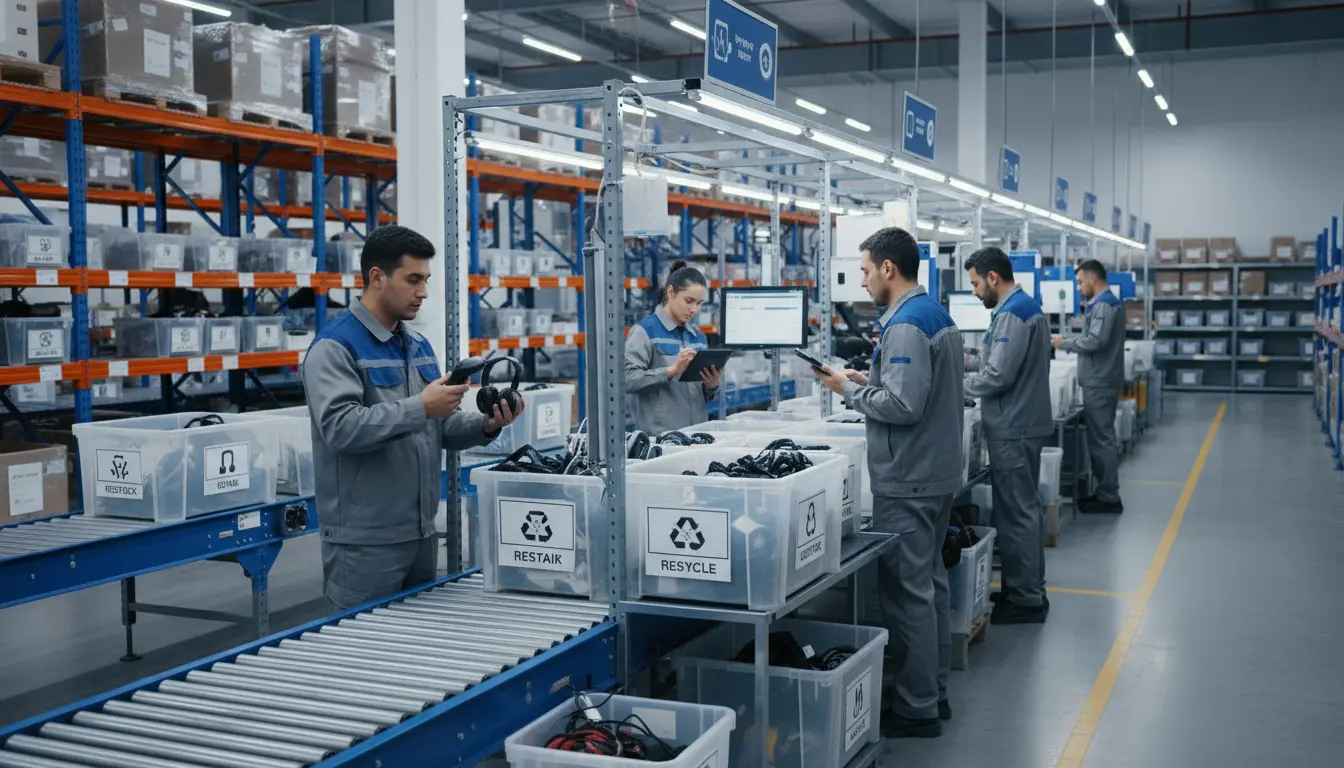
When the item arrives, the warehouse scans it into the WMS, matches it to the RMA, and updates its status. Without that step, customer service cannot answer refund questions and ecommerce teams cannot trust inventory numbers.
Then the item is checked against brand-specific rules. Apparel may need checks for wear, tags, stains, packaging, and barcode condition. Cosmetics may require seal, lot, expiry, and damage checks.
A simple grading model:
[xyz-ihs snippet=”Reverse-Logistics-Canada-How-Growing-Brands-Build-Returns-Workflows-That-Protect-Margin”]
4. Disposition and Inventory Update
Disposition is the decision about what happens next. The faster that decision happens, the more value a brand can recover.
For a DTC apparel return, the best outcome may be same-week restocking. For a wholesale return, it may be re-ticketing and moving units into an outlet channel. For damaged consumer goods, it may be recycling or vendor claim documentation.
Canadian ecommerce returns generate more than 2 billion kg of waste each year. Products with a planned second path are less likely to become full write-offs — a sustainability benefit that also protects margin.
Reverse Logistics Canada: What Changes When Returns Cross the Border
Cross-border returns are where many brands lose control.
A U.S. brand entering Canada may start with a simple plan: ship Canadian orders from the U.S. and ask customers to mail returns back. That can work at low volume. It starts to break when return costs rise, refunds slow down, and customers realize they are paying more effort for the same product experience.
81% of consumers review a retailer’s return policy before completing a purchase, and 76% say free returns influence their buying decision, according to consumer research cited across multiple 2026 ecommerce reports.
A better cross-border return model may include:
- A Canadian return address
- Consolidated freight when needed
- Local inspection
- Clear rules for duties and taxes
- Return reason reporting by country and channel
Brands already using B2C order fulfillment in Canada should design the returns path at the same time as outbound shipping. Otherwise, customer experience improves on delivery but weakens when something comes back.
When 3PL Returns Management Makes Sense
In-house returns can work when order volume is low, SKUs are simple, and the team can process returns quickly without pulling labour from outbound orders.
Outsourcing makes sense when the return workflow starts slowing growth. Watch for the warning signs:
- Returns take more than 3 to 5 business days to inspect
- Customer service is chasing refund status
- Saleable stock sits in totes
- Wholesale returns need photos or credits
- Leadership cannot see return rate, reason codes, or recovery value by SKU
For a brand doing 2,500+ outbound units per month, even a modest 12% return rate creates 300 monthly units that need a controlled path. At 10 minutes of handling per unit, that is 50 labour hours before customer service time, freight claims, or finance work.
A 3PL does not remove complexity. It gives that complexity a system, trained labour, warehouse space, and reporting cadence — see Evolution’s returns management service for what that looks like in practice.
What to Ask a Canadian 3PL Before Outsourcing Returns
Not every warehouse that receives parcels can run reverse logistics well. The difference shows up in the details. Ask these questions before choosing a partner:
- Can you support separate return rules for DTC, Amazon, wholesale, and retailer channels?
- How do you inspect, photograph, and grade products?
- How quickly do Grade A items go back into saleable inventory?
- What reporting do we get by SKU, channel, reason code, and disposition?
- Can you support B2B and B2C returns in the same operating model?
- Where are returns processed, and how does that affect Canadian transit time?
Many growing brands need both consumer speed and wholesale control. A wholesale return may require retailer documentation, credit workflows, relabeling, and pallet-level handling. A DTC return may need fast status updates, customer visibility, and branded packaging decisions.
Metrics That Show Whether Your Returns Process Is Working
A returns workflow should be measured like any other operational process. Start with:
- Return rate by SKU
- Reason-code mix
- Average processing time
- Return-to-stock time
- Restock percentage
- Cost per return
- Recovery value
- Refund turnaround
The best metric depends on the product category. Apparel teams may focus on fit-related return reasons and return-to-stock speed. Wholesale distributors may care most about credit accuracy, photo proof, and retailer compliance.
FAQ: Reverse Logistics and Returns Management in Canada
What is reverse logistics in Canada?
Reverse logistics in Canada is the process of moving products from customers, retailers, or distribution points back through the supply chain for return, inspection, restocking, repair, resale, recycling, or disposal.
When should a brand outsource returns management?
Outsource when returns are slowing refunds, tying up warehouse space, creating inventory errors, or becoming too complex across DTC, wholesale, Amazon, and cross-border channels.
How do cross-border returns work for brands selling into Canada?
Cross-border returns often use a Canadian return address, local intake, inspection, and consolidated routing. Some goods stay in Canada for resale, while others move back to the original hub depending on value, demand, and handling requirements.
How do I outsource returns processing?
Start by mapping your current return volume, reason codes, and average processing time, then compare that against a 3PL’s inspection speed, grading process, and reporting by SKU and channel. Ask specifically how quickly Grade A items go back into saleable inventory — that number affects recovered margin more than the per-unit handling fee does.
Build Returns Into the Fulfillment Strategy from the Start
Returns are part of the customer experience, inventory model, and margin equation.
For growing brands, the goal is not to eliminate every return. That is unrealistic. The goal is to make sure each return has a clear path, fast inspection, accurate reporting, and the best possible recovery outcome.
If your brand is expanding across Canada, the U.S., wholesale, ecommerce, or retail channels, Evolution Fulfillment can help map the return workflow before it becomes a margin problem. Request a fulfillment strategy call to see whether Evolution is the right long-term fit for your channel mix.