
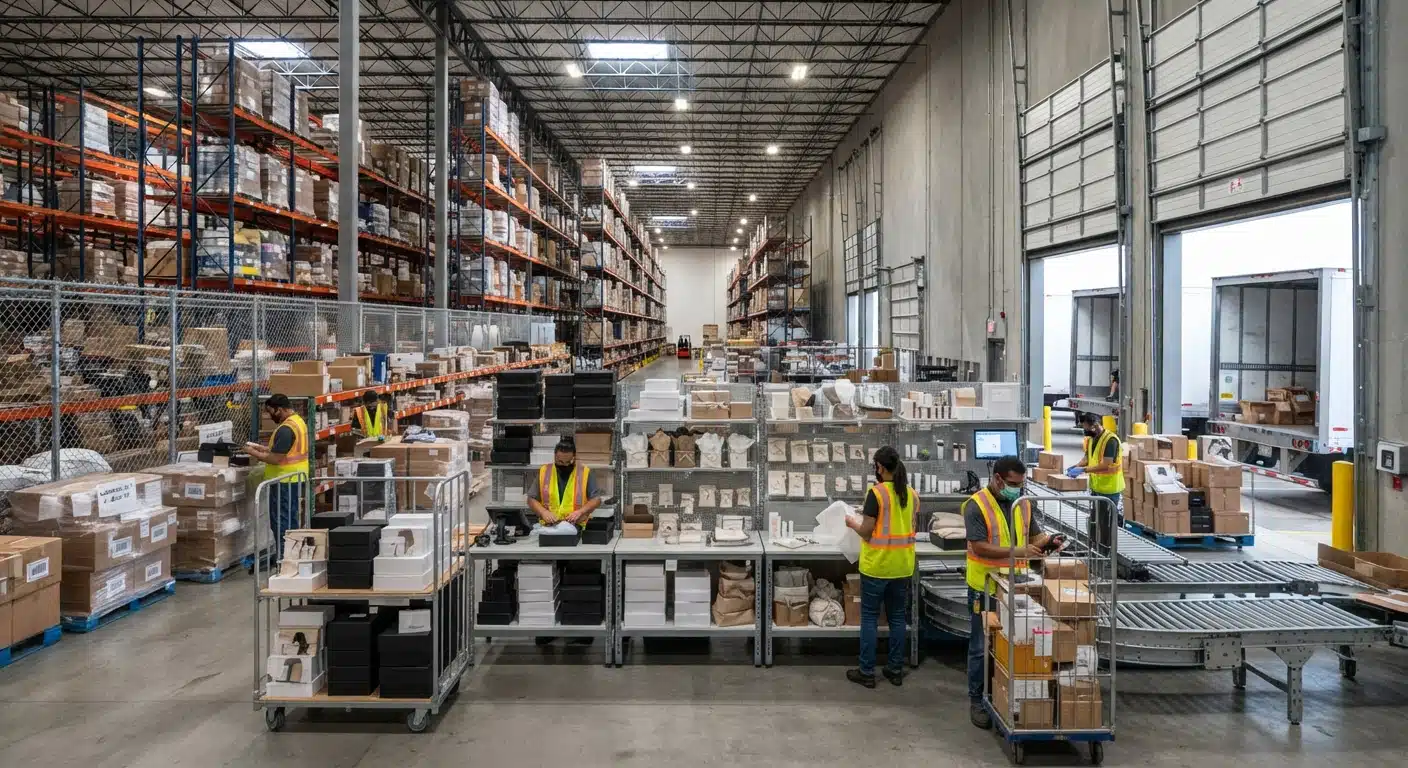
A seasonal launch can look simple from the outside: send the right products, add the right insert, hit the drop date. Inside the warehouse, it is a different kind of pressure. One missing card in an influencer kit, one wrong colourway in a retailer sample pack, or one late carrier pickup can turn a campaign built for growth into a cleanup job.
For brands selling across Canada and the United States, promotional campaign fulfillment canada is not just packing boxes for a short-term push. It is a controlled process for kitting, inventory staging, packaging instructions, quality checks, order release timing, and post-campaign reporting. The best campaign work feels easy to the customer because the operational rules were clear before the first unit was picked.
Campaign fulfillment starts before the first order ships
Campaign fulfillment includes the warehouse work behind product launches, seasonal promotions, influencer boxes, retail samples, gift-with-purchase programs, subscription drops, and limited-time bundles. The task may be short-lived, but the setup needs the same discipline as normal fulfillment.
A typical apparel campaign might involve 8 jacket sizes, 4 colours, printed inserts, tissue wrap, hangtag checks, and different ship dates for wholesale, DTC, and creator packages. A cosmetics promotion might require shade matching, batch awareness, expiry review, fragile packing, and return instructions. These are not standard single-line orders.
Good campaign planning answers practical questions early:
- Which SKUs are part of the campaign?
- Are units pre-kitted or assembled at pick time?
- What packaging, inserts, labels, or samples go in each box?
- Which orders must ship together, and which can ship in waves?
- What happens if one component runs short?
- Who approves the first packed kit before full release?
Brands running larger campaigns should connect this planning to their wider fulfillment services rather than treating each promotion as a warehouse exception. That keeps campaign work from disrupting everyday ecommerce and wholesale orders.
When in-house campaign packing starts to break down
In-house packing can work when a team is sending 50 media kits from the office. It starts to fail when a launch involves thousands of units, multiple channels, and strict timing.
The warning signs are easy to spot. Customer service starts asking the warehouse for manual stock counts. Marketing changes the insert after packing has started. Retail sales needs sample kits shipped by a different carrier. Ecommerce orders keep coming in while the team is trying to stage campaign inventory on folding tables.
That is where the cost of “doing it ourselves” shows up. Staff hours move away from sales, merchandising, and account management. Inventory gets pulled from available stock without clean system updates. Campaign components sit in unmarked cartons. Teams lose confidence in what can be promised to retailers, creators, and customers.
For a brand shipping 2,500 or more outbound units per month, campaign fulfillment should use the same warehouse controls as regular operations: receiving checks, SKU mapping, bin locations, pick rules, pack instructions, scan verification, and exception reporting.
Kitting needs clear rules, not good intentions
Kitting is one of the highest-risk parts of campaign fulfillment because the finished box may contain several products that do not normally ship together. A small instruction gap can multiply quickly.
Take a spring apparel promotion: one hoodie, one pair of socks, one care card, one discount insert, and one size-specific return label. If the warehouse does not have a kit bill of materials, pickers may treat the order as a loose bundle. That increases the chance of missing inserts, wrong sizes, or inconsistent presentation.
A better process uses a kit specification before work begins. It should include:
| Campaign element | What the warehouse needs |
|---|---|
| Product SKUs | Exact SKU, size, colour, quantity |
| Packaging | Box, mailer, tissue, tape, dunnage, sticker |
| Inserts | Version, language, placement, expiry date if relevant |
| Labels | Shipping label, retailer label, carton label, return label |
| QA rule | What gets checked before cartons leave the pack station |
| Shortage plan | Who approves substitutions, holds, or partial release |
This is where a 3PL can protect the brand experience. For ecommerce campaigns, B2C order fulfillment needs to handle fast order release and branded packaging without slowing daily DTC volume. For retailer programs, B2B order fulfillment may need routing guides, pallet labels, pack slips, carton counts, and appointment timing.
Inventory staging protects the campaign and the rest of the business
A promotion can fail even when the packing instructions are correct if inventory is not staged properly. Campaign stock must be visible, reserved, and separated from normal sellable inventory when timing matters.
For example, a lifestyle brand might allocate 1,200 units to a holiday gift-with-purchase offer. If those units remain fully available to every sales channel, wholesale orders can consume the stock before the campaign opens. If the stock is physically separated but not updated in the WMS, ecommerce may oversell what is no longer available.
The operational answer is controlled staging:
- Receive campaign components as separate SKUs or lot-controlled materials where needed.
- Confirm quantities before campaign build begins.
- Reserve inventory in the WMS for the campaign window.
- Stage components in marked warehouse locations.
- Run a first-article check before full kitting.
- Reconcile leftover materials after the campaign closes.
This is closely tied to inventory accuracy. If a brand already struggles with stock mismatches, campaign work will make those errors more visible. Evolution’s guide to inventory accuracy in 3PL fulfillment explains how WMS controls, cycle counts, and SLA reporting reduce those surprises.
Carrier timing matters as much as packing quality
Campaign deadlines are often public. A product launch date, holiday cutoff, retailer floor set, or creator posting window cannot slide quietly without commercial impact.
That means the fulfillment plan needs carrier timing from the start. Canada-only campaigns may use different service levels than cross-border drops into the United States. A Vancouver warehouse may release west coast orders differently from east coast orders to protect the arrival window. Wholesale shipments may need dock appointments, while DTC parcels need daily scan acceptance.
The best plan works backward from the customer promise:
- Required arrival date
- Carrier service level
- Pickup cutoff
- Pack completion time
- Pick release time
- Inventory staging deadline
- Component receiving deadline
For brands selling across channels, this timeline also needs to reflect retail expansion plans. A campaign tied to a wholesale rollout has different risks from a DTC-only promotion. Evolution’s article on adapting fulfillment before retail expansion is useful for brands moving from ecommerce launches into retailer programs.
Reporting should show what happened, not just what shipped
Campaigns are learning moments. After the final parcel leaves the warehouse, the brand should be able to see more than a shipment count.
Useful post-campaign reporting may include units shipped, orders held, component shortages, error notes, carrier exceptions, leftover inventory, return volume, and timing against the planned release. This helps marketing, operations, finance, and sales understand whether the campaign process can scale.
If a brand plans four seasonal drops a year, the first campaign should improve the second. Maybe the insert arrived too late. Maybe one SKU had a higher pick error risk because the packaging looked too similar. Maybe carton dimensions created higher postage than expected. Those details should feed the next plan.
A practical campaign fulfillment checklist for growing brands
Before handing a campaign to a warehouse or 3PL, confirm these items:
- Final SKU list and kit structure
- Approved packaging instructions with photos if needed
- Insert versions and placement rules
- Inventory reservation process
- Carrier and service-level plan
- Wholesale routing or retailer rules
- First-kit approval workflow
- Exception contact and response time
- Reporting needs after shipment
- Return or leftover inventory plan
Brands with retailer, DTC, Amazon, and wholesale activity should also confirm how campaign inventory affects every connected platform. A promotion should not create stock confusion across Shopify, Amazon, ERP records, or retailer allocations.
How Evolution supports campaign fulfillment in Canada
Evolution Fulfillment works with growing brands that need more than a box-packing service. Campaign work sits inside a broader operating model: warehouse controls, system visibility, white-glove communication, and experience across B2C, B2B, Amazon, and North American distribution.
For fashion, cosmetics, lifestyle, pet, housewares, jewelry, and small luxury brands, the goal is not just to ship campaign orders. It is to protect the launch moment while keeping daily fulfillment stable.
If your team is planning a seasonal promotion, influencer kit program, retailer launch, or limited-time bundle, Evolution can help map the fulfillment plan before volume hits the warehouse. Request a fulfillment strategy call to review SKUs, packaging needs, timing, channel mix, and the controls needed to ship the campaign with confidence.