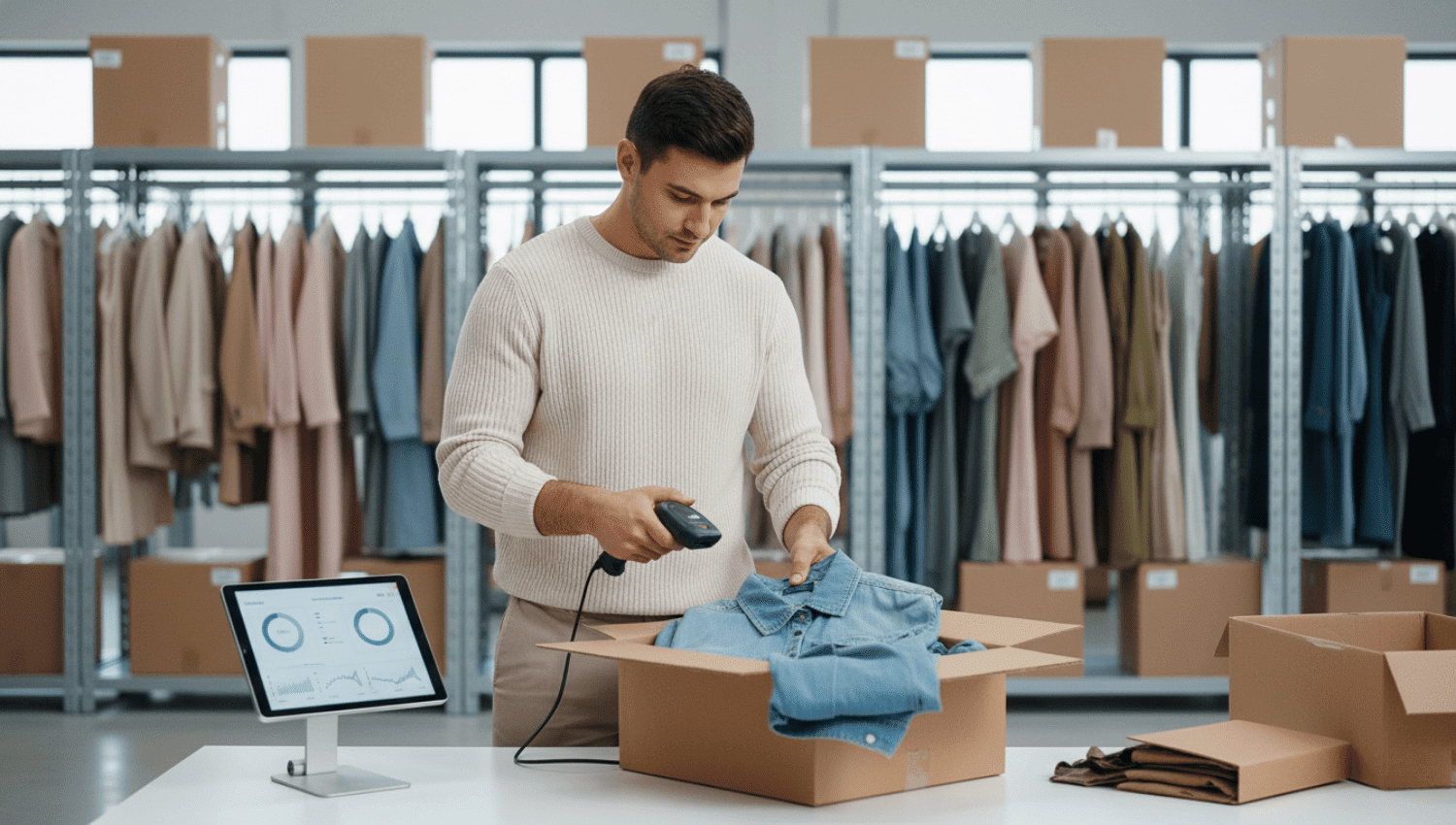
If you run a clothing brand long enough, you eventually hit that moment—the one where your designs are getting attention, sales are climbing, and yet your back-end operations feel like a tangled clothing rack after a sample sale. Size curves go missing, USA shipments get stuck at customs, returns flood in after every drop, and somehow the same SKU shows “in-stock” and “out-of-stock” in two places at once.
That’s the moment every growing fashion brand asks the same question:
“Is our logistics hurting our growth more than it’s helping it?”
And that’s where apparel logistics steps in—not as another “shipping solution,” but as the operating system that keeps your brand moving smoothly. If you’ve ever wondered what is apparel logistics? or how fashion fulfillment actually works behind the scenes, this guide breaks down the full picture in a way that’s practical, brand-friendly, and growth-focused.
Think of this as your complete framework for building a supply chain that protects margins, elevates your unboxing experience, reduces operational stress, and helps your brand scale in North America without compromising who you are.
Apparel Logistics: The Complete Framework for Optimizing Your Fashion Supply Chain
Most clothing brands reach a moment when the behind-the-scenes chaos becomes louder than the sales you’re trying to celebrate. The racks are full, customers are waiting, and your team is still wrestling with size runs, returns, and shipping cutoffs—and that’s usually when the question hits:
“Is it time to bring in a 3PL that actually understands apparel?”
If you’ve ever felt that tension—fast growth on the front end, operational friction on the back end—this guide is for you. It breaks down what is apparel logistics, why general providers fall short, and how fashion fulfillment built for apparel protects your margin, your brand experience, and your sanity. Consider this your no-nonsense, brand-friendly roadmap to choosing logistics that scale with you, not against you.
The Reality Check: 5 Problems Apparel Brands Face (and the Payoffs of Fixing Them)
Fashion moves fast—your logistics should move faster. Here’s the real-world snapshot:
Problem → Payoff
• Too many SKUs, not enough visibility → Inventory accuracy above 99% with size/colour tracking that prevents stockouts and oversells.
• High return rates eating margin → Reverse logistics that actually recovers 60–70% value.
• Cross-border unpredictability → Domesticated Canada–US workflows with predictable landed cost.
• Chargebacks and compliance headaches → EDI-ready fashion fulfillment that prevents penalties before they happen.
• Slow or inconsistent shipping → OTIF rates above 97% and cycle times under 24 hours.
If you recognise even one of these friction points, your apparel logistics system is holding you back—not because you’re doing anything wrong, but because fashion simply requires a different operational backbone.
What Is Apparel Logistics?
Apparel logistics is the end-to-end movement of fashion inventory—from inbound QC to storage, order fulfillment, cross-border shipping, and returns—designed around the realities of fashion: frequent drops, size curves, high returns, brand presentation, and strict retail compliance.
Where general logistics handles boxes, apparel logistics handles garments, variants, and brand moments.
What Is the Meaning of Fashion Logistics?
Fashion logistics means building a supply chain that protects your margin and brand story while moving apparel quickly across multiple channels. It accounts for:
- Seasonal trends
• Colourway explosions
• Variant control
• Presentation-ready packaging
• High return cycles
You’re not just shipping a product—you’re shipping the brand.
Pillar 1: Build on a Brand Fulfillment Model (White-Glove 3PL + Deep Integration)
Apparel brands thrive when logistics feels like an in-house extension—not an outsourced vendor.
A Brand Fulfillment model combines:
• Specialist apparel 3PL teams
• Deep WMS → OMS → ERP integrations
• Bespoke SOPs (steaming, ticketing, GOH/flat-pack rules)
• Daily dashboards + QBRs
• Named pods that know your size curves and routing guides
This model improves accuracy, reduces returns, and cuts launch timelines because everyone—from receiving to returns—is following your brand playbook, not a generic warehouse process.
Pillar 2: Fashion Fulfillment That Protects Brand Experience
In apparel logistics, fulfillment is where your brand either shines or suffers.
Inbound & Inventory Accuracy
Apparel demands near-perfect accuracy because every missed colourway or mismatched size creates an unhappy customer. Target:
• 99%+ inventory accuracy
• 48-hour dock-to-stock
• Cycle counts on cadence
Pick, Pack & Value-Added Services
Fashion requires value-adds general warehouses rarely offer:
• Steaming
• Ticketing
• Polybagging
• Kitting & bundling
• Branded packaging
• Influencer/gifting sets
Presentation = retention.
Multi-Channel Execution
A strong fashion fulfillment setup handles DTC, marketplace, and B2B with equal precision:
• EDI-ready for wholesale
• Amazon FBA/FBM workflows
• Marketplace routing guide compliance
This eliminates chargebacks, late deliveries, and rejected shipments.
Pillar 3: Domesticate Cross-Border Shipping for Predictable Costs
Cross-border is where fashion brands quietly lose margin—unless it’s engineered properly.
DDP, DAP, or Section 321?
Use the right model based on SKU value, volume, and velocity:
• DDP for predictability
• DAP for complexity
• Section 321 for sub-$800 parcels (duty-free)
Inventory Localisation
A US inventory node can cut transit times 2–3 days and improve conversion rates.
Compliance That Actually Matters
Fashion has unique compliance needs:
• Fibre content accuracy
• Care-label rules
• Textile regulations (FTC/CPSIA)
Get these wrong, and cross-border delays become expensive mistakes.
Pillar 4: Turn Returns Into a Value Stream (Not a Cost Sink)
Returns are unavoidable—but they don’t have to destroy your margin.
The apparel returns engine should include:
- Automated RMA intake
• Photo-based triage
• A/B/C grading
• Restock → refurbish → resale → donation routes
• Turnaround SLAs (target: under 5 days)
A refined returns workflow recovers 60–70% of value and preserves customer loyalty.
Pillar 5: Standardise Your Tech Stack & KPIs
Great apparel logistics is built on clarity, not guesswork.
Your essential tech stack:
- WMS
• OMS
• ERP
• iPaaS integration layer
• BI dashboards
• EDI capability
• Shopify/marketplace connectors
The KPIs that keep you in control:
- OTIF ≥ 97%
• Inventory accuracy ≥ 99%
• Return recovery ≥ 70%
• Order cycle time < 24 hrs
• Dock-to-stock < 48 hrs
• Chargebacks trending downward
Clear metrics = predictable scale.
How to Choose an Apparel 3PL (and Avoid the Wrong Ones)
Look for these non-negotiables:
• Proven apparel experience
• GOH + flat-pack workflows
• Amazon-ready compliance
• EDI expertise
• Real-time dashboards
• Scenario-based pricing
• Dedicated pod/team
• Cross-border strategy
• Ability to run a paid pilot
And always ask for two case studies with real numbers—not generic “success stories.”
Run a 6–8 Week Pilot (The Most Reliable Way to Validate a 3PL)
A proper apparel logistics pilot includes:
• Real SKUs
• Peak simulation
• FBA prep + DTC + wholesale orders
• Returns grading workflow
• SLA scoring
• Cost breakdowns
The best pilots reveal bottlenecks now instead of during your busiest season.
Final Thoughts
Fashion doesn’t scale on guesswork. It scales on a logistics foundation built for the realities of apparel: variant-heavy SKUs, tight margins, strict retail rules, and customers who judge your brand by the unboxing moment.
Apparel logistics gives you that foundation—through integrated systems, white-glove handling, smarter cross-border strategy, and a returns engine that protects margin instead of draining it.
If you’re ready to turn these frameworks into real operational wins, explore a clothing fulfillment solution built specifically for apparel brands:
Evolution Fulfillment – specialist apparel 3PL services
