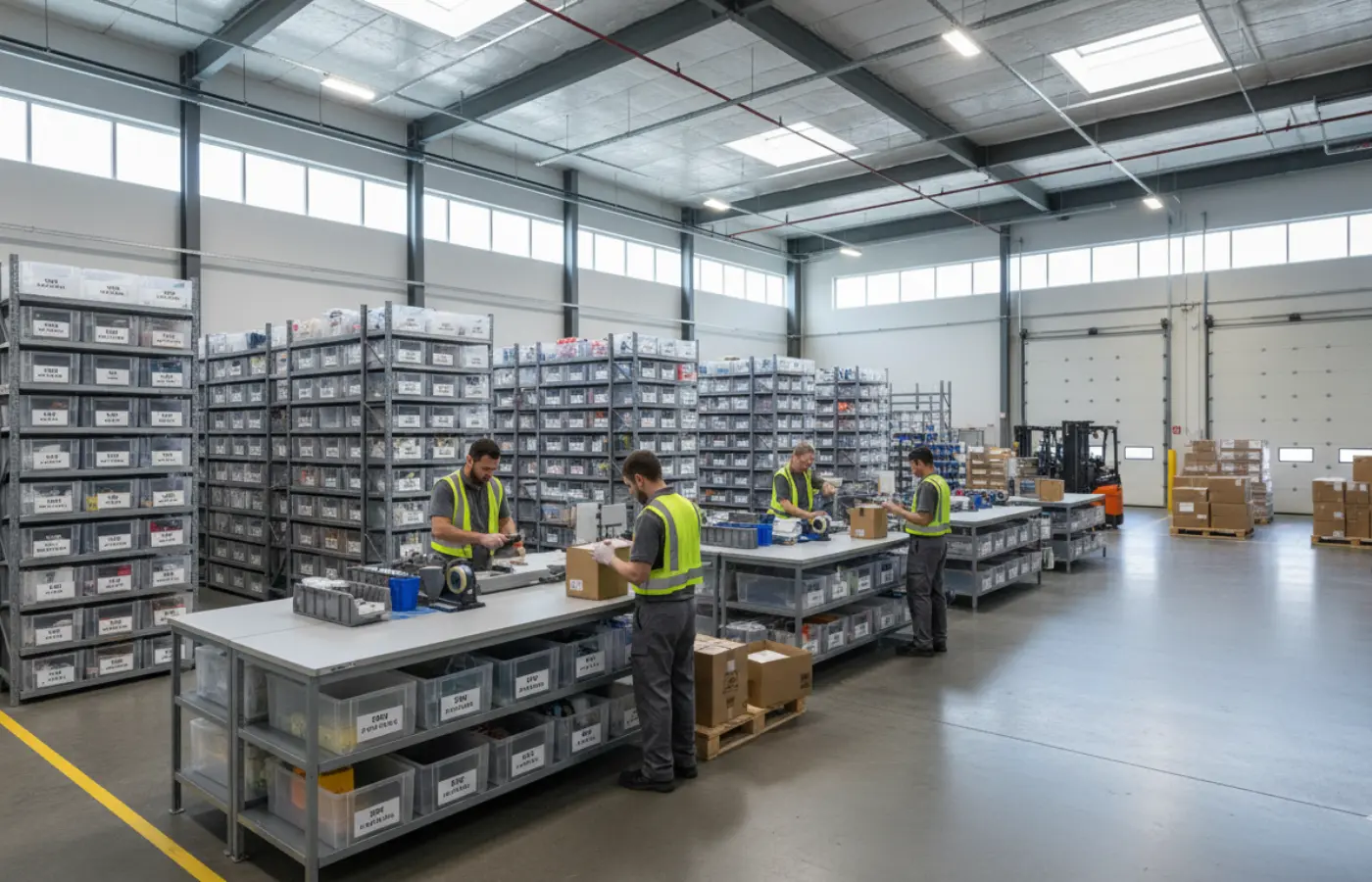
Running a small business in Canada means every dollar counts. Picking the wrong fulfillment center can hurt your margins fast. This guide covers what small-business fulfillment centers in Canada actually cost in 2026, how to match your order volume to the right model, and what to check before you sign with a third-party logistics provider.
Whether you ship 100 orders a month or 2,000, there is a fulfillment center in Canada that fits your stage and your budget.
Why Canadian Fulfillment Centers Matter for Small Business
Packing and shipping orders yourself takes time away from growing your brand. Fulfillment centers in Canada handle storage, pack and shipping, and logistics operations for you. This frees up your time and often lowers your per-order shipping costs.
The right partner also helps you scale. When order volume spikes, a good third-party logistics provider absorbs that without extra hiring or warehouse space on your end. For small businesses selling across North American markets, outsourcing to a Canadian fulfillment center is one of the fastest ways to improve customer satisfaction and reduce ship times.
Learn how B2C order fulfillment services work for direct-to-consumer brands shipping across Canada.
Monthly Order Volume Tiers
Your monthly order volume is the most important factor when choosing from fulfillment centers in Canada. Most providers price and structure their order fulfillment services around three tiers.
Tier 1: 0–500 Orders/Month
At this stage, you may be self-fulfilling or using a small local warehouse. A fulfillment center still makes sense if your SKU count is high, your products are bulky, or you sell on multiple ecommerce platforms. Look for partners with low minimums and flexible storage pricing. Your supply chain should be simple to manage at this stage.
- Best fit: DTC brands on Shopify or other ecommerce platforms, early-stage fashion or lifestyle products
- Key need: Low minimums, fast setup, no long-term commitment
- Watch out for: High per-order fees that don’t scale down at low volume
Tier 2: 500–2,000 Orders/Month
This is where outsourcing to a fulfillment center starts to pay off clearly. You likely have stable SKUs, repeat customers, and a clear channel mix. At this volume, pack and shipping efficiency and SLA reliability matter more than just finding the cheapest rate. Good inventory management becomes essential here.
- Best fit: Growing ecommerce brands, wholesale and DTC mix
- Key need: Reliable same-day order fulfilment, multi-channel support, clean inventory management
- Watch out for: Providers who cannot support both B2C and B2B from one operation
See how B2B order fulfillment services support wholesale and retailer compliance at this volume tier.
Tier 3: 2,000+ Orders/Month
At this scale, you need a strategic logistics service partner, not just a warehouse. Carrier rate agreements, SLA governance, returns management, and deep system integration all become critical. Mistakes at this volume are expensive and hard to recover from.
- Best fit: Established brands with multi-channel logistics operations, Amazon plus DTC plus wholesale
- Key need: Dedicated account management, custom workflows, seamlessly integrate with your existing tech stack
- Watch out for: Partners without a documented escalation and SLA review process
Brands at this tier often benefit from the Brand Fulfillment Model, which acts as a full extension of your logistics operations.
2026 Cost Benchmarks for Small-Business Fulfillment Centers in Canada
Costs vary by provider, volume, and SKU profile. These ranges reflect typical 2026 pricing for small-to-mid-size brands using fulfillment services in Canada.
| Service | Low End | High End | Notes |
| Storage (per bin/month) | $2.50 CAD | $6.00 CAD | Pallet rates vary by location |
| Storage (per pallet/month) | $20 CAD | $45 CAD | Dedicated vs shared space |
| Pick & pack — first item | $2.00 CAD | $4.50 CAD | Base fee per order |
| Pick & pack — add’l items | $0.30 CAD | $0.75 CAD | Per additional line item |
| Receiving (per carton) | $2.00 CAD | $5.00 CAD | Higher for non-ASN receipts |
| Returns processing | $3.00 CAD | $8.00 CAD | Per unit inspected and processed |
These are benchmarks, not quotes. Your actual shipping costs depend on SKU count, order complexity, packaging needs, and volume commitments. Canadian fulfillment centers may also charge setup fees, monthly minimums, or account management fees. Always ask for a full rate card.
For a full breakdown of how third-party logistics pricing works, read the 3PL Pricing: The Real Cost of Fulfillment in 2025 guide.
What to Look For in a Small-Business Fulfillment Partner
No punishing minimums
Some fulfillment centers in Canada require 500 or more orders per month to get started. Look for providers with flexible entry points or tiered pricing that grows with your ecommerce fulfillment needs.
Multi-channel support
Your fulfillment center should handle DTC, wholesale, and marketplace orders from one logistics service operation. Running separate workflows for each channel creates errors and raises shipping costs.
Inventory management and visibility
You should be able to see your stock levels in real time. Good inventory management is the backbone of any reliable ecommerce fulfillment operation. If a provider cannot give you accurate, live data, order errors will follow.
Ecommerce platform integration
Make sure the provider can seamlessly integrate with your ecommerce platform — Shopify, WooCommerce, or whatever you use. Manual order entry is a sign of an outdated operation and slows down fast shipping.
Transparent pricing
Ask for a full rate card before signing. Hidden fees for receiving, returns, and account management add up fast. The best fulfillment services in Canada are upfront about every cost line.
Onboarding Checklist: Getting Started With a Fulfillment Center
Before your first order ships, make sure these five steps are complete.
Step 1: Integration Setup
Connect your ecommerce platform to the provider’s warehouse management system. Test that orders flow automatically and that inventory management data syncs in real time. Confirm the integration works before going live.
Step 2: SKU Mapping
Every product needs a clean SKU, accurate dimensions, weight, and a clear image for identification. Send your full SKU list before inbound shipments arrive. Gaps here cause receiving delays and slow down your supply chain.
Step 3: Packaging Rules
Define your pack and shipping standards by channel. DTC orders may need branded inserts. Wholesale orders must meet retailer routing guides. Document these rules in writing so the warehouse follows them every time.
Step 4: SLA Confirmation
Agree on same-day cutoff times, order accuracy targets, and receiving turnaround windows in writing. SLAs should be measurable. They directly affect your ability to offer fast shipping and improve customer satisfaction.
Step 5: Returns Workflow Setup
Define how returns are received, inspected, graded, and restocked before your first order goes out. A clear returns process from day one protects your margins and keeps inventory management accurate.
Common Mistakes Small Businesses Make When Choosing Fulfillment Centers in Canada
- Choosing on price alone — Low pick and pack fees mean nothing if receiving is slow or inventory management is unreliable
- Skipping integration testing — A broken ecommerce platform connection causes mispicks and missed SLAs
- Not defining packaging rules upfront — Inconsistent pack and shipping damages your brand and creates chargeback risk
- Ignoring the returns process — Returns are inevitable; not having a plan raises your shipping costs over time
- Treating 3PL selection as a one-time decision — Review performance quarterly as your logistics operations grow
Next Step: Find the Right Fulfillment Center for Your Small Business
The right fulfillment center for your small business depends on your order volume, channel mix, and North American growth goals. Start by knowing your monthly order count, SKU count, and whether you need ecommerce fulfillment, wholesale order fulfillment services, or both.
Evolution Fulfillment works with small and mid-size brands across fashion, apparel, cosmetics, and lifestyle. Our logistics service is built to grow with your business — reducing ship times, lowering shipping costs, and helping you improve customer satisfaction across every channel.
Request a fulfillment strategy call. Bring your current order volume, channel breakdown, and top SKUs. We will build a cost model around your real numbers.
