
Your container arrives at a North American port on Tuesday. By Friday, your competitor’s shipment is already on retail shelves—while yours is still sitting in a warehouse. That four-day delay is not just inconvenient. It typically costs 2–3% of revenue through higher carrying costs, product aging, and missed first-mover advantage.
Mid-market brands expanding into North America face a simple but costly problem: traditional warehousing adds 7–14 days to the supply chain and can consume 30–40% of the logistics budget. Most providers do not clearly show this “hidden time tax,” so brands only notice it when cash flow slows and competitors take shelf space.
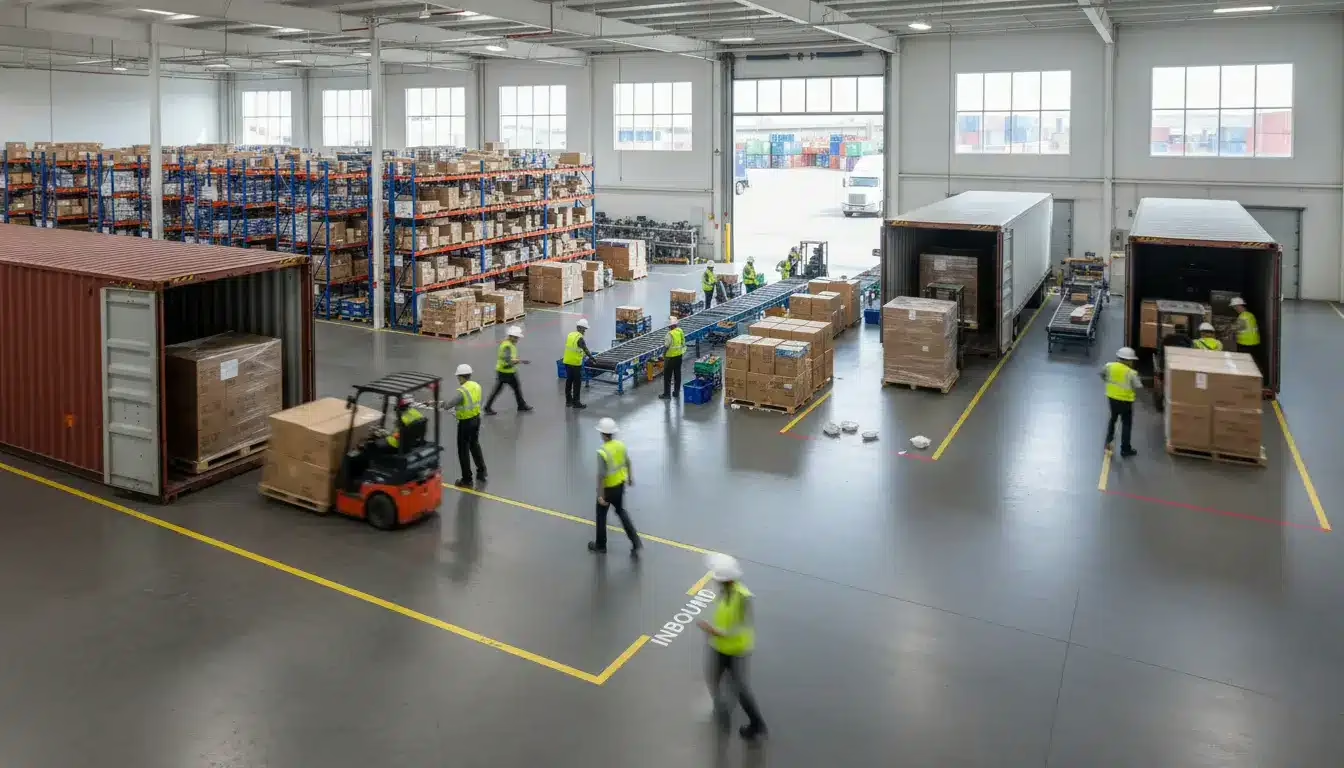
Cross-docking is the solution. It is a logistics model that moves products from inbound containers directly to outbound trucks within hours, not days. Instead of storing inventory, cross-docking prioritizes speed and cash conversion.
In this guide, you’ll see how European fashion brands, Canadian retailers, and regional distributors cut delivery times by up to 60% and reduce warehousing costs by $8,000–$15,000 per shipment, using real scenarios and clear cost comparisons.
Why Mid-Market Brands Are Losing 7-14 Days (and Thousands in Costs) Between Container Arrival and Retail Delivery
Consider a European fashion brand shipping 500 pallets from Rotterdam to Toronto. The container clears customs on Tuesday. In a traditional warehouse setup, those pallets are received, stored, picked, sorted, and reloaded for delivery to 12 retail locations. By the time stores receive inventory, 10–14 days have passed.
During that time:
- Cash is tied up in inventory
- Retailers wait for stock
- Competing brands reach shelves first
This is common for mid-market brands entering North America. Each extra day inventory sits idle delays cash conversion. Every additional handling step—receiving, storing, picking, staging—adds labor cost, increases damage risk, and slows revenue.
For a $10M brand, these inefficiencies can quietly drain $2,000–$5,000 per month in avoidable logistics costs.
When brands compress this delay by 8–12 days, the impact is significant. Inventory cycles shorten from 30–45 days to 15–18 days. For companies holding $2–3M in inventory, that can free $250K–$500K in working capital.
Retailers benefit too. Faster delivery improves sell-through and reduces markdown requests. Cross-docked products often reach shelves within 48 hours of arrival, improving margins for everyone involved..
What is Cross-Docking in Logistics? The Strategic Definition for Growing Brands
Cross-docking is a supply chain strategy where inbound goods are transferred directly to outbound shipments with little or no storage, usually within 24–48 hours. Products are unloaded, scanned, sorted by destination, and loaded onto outbound trucks without entering long-term warehouse storage.
Think of it as a flow-through process. Containers arrive, pallets are sorted immediately, and products keep moving. Compared to traditional warehousing, cross-docking can reduce dwell time by up to 85%.
The key difference is focus:
- Warehousing optimizes for storage efficiency
- Cross-docking optimizes for speed and inventory turnover
For brands shipping 500+ pallets per month to multiple retail locations, cross-docking often delivers measurable ROI within 90 days.
Cross-docking also improves flexibility. Inventory is not locked into storage. If a retailer changes quantities or destinations, routing can be adjusted quickly—without waiting for pick-and-pack cycles..
How Cross-Docking Reduces Dock-to-Stock Time for Retail Delivery
Dock-to-stock time—the gap between container arrival and store delivery—typically drops from 10–14 days to 24–48 hours with cross-docking.
This works because:
- Advance Ship Notices (ASNs) arrive before containers
- Dock doors and staging areas are pre-assigned by destination
- Products move directly from container to outbound trucks
For brands supplying multiple retail locations, shipments can be split and dispatched the same day customs clears—without entering warehouse storage.
What is the Difference Between Cross-Docking and Drop Shipping?
These two models are often confused, but they serve very different purposes.
- Drop shipping sends individual customer orders directly from suppliers to consumers. The brand does not handle inventory.
- Cross-docking moves bulk shipments through a consolidation facility to retailers or fulfillment networks. The brand owns inventory and controls quality and timing.
Drop shipping works for single-unit ecommerce orders. Cross-docking works for multi-pallet retail and B2B shipments where speed and coordination matter.
When Should Your Brand Consider Cross-Docking? Revenue and Volume Triggers That Signal Readiness
Cross-docking is not necessary for every business. Brands shipping small volumes to one location can rely on traditional warehousing.
Cross-docking becomes valuable when three factors align:
- Higher volume
- Multiple destinations or channels
- Cash flow pressure from slow inventory movement
Most brands reach this point between $5–20M in annual revenue, moving 400–600 pallets per month across several retail partners or regions.
Handling fees for cross-docking typically run $8–15 per pallet, but storage costs of $1.50–$3.00 per pallet per day disappear. At scale, the math quickly favors cross-docking—especially when brands factor in reduced markdowns and faster cash cycles.
At What Shipment Volume Does Cross-Docking Become Cost-Effective?
Break-even often occurs around 400–500 pallets per month. However, the threshold can be lower if a brand:
- Pays for frequent inter-warehouse transfers
- Uses expedited freight to correct misrouted inventory
- Loses margin through retail markdowns due to late deliveries
Many mid-market brands already spend $500–$1,200 per month fixing inventory placement mistakes. Cross-docking eliminates these costs by routing shipments correctly at the first unload.
For seasonal goods, the benefit is even clearer. During peak selling periods, every day of delay can mean lost revenue. In these cases, cross-docking is not just cheaper—it is necessary to stay competitive.
How Cross-Docking Transforms Your Fulfillment Strategy
Cross-docking removes the friction that slows mid-market brands competing with larger players. By reducing storage, handling, and delivery time, brands improve cash flow, retail performance, and operational flexibility.
Compressing delivery from 10–14 days to 24–48 hours can free $150K–$400K in working capital, improve inventory turns, and strengthen retail relationships. For brands moving 400+ pallets per month, these benefits typically outweigh costs within the first few months.
The practical next step is to review where inventory sits idle today. If products spend days waiting in warehouses or moving between locations, cross-docking may be the missing piece.
Brands often implement this model with partners like Evolution Fulfillment, whose cross-docking operations are designed specifically for mid-market growth—where speed, accuracy, and cash flow matter more than storage space.