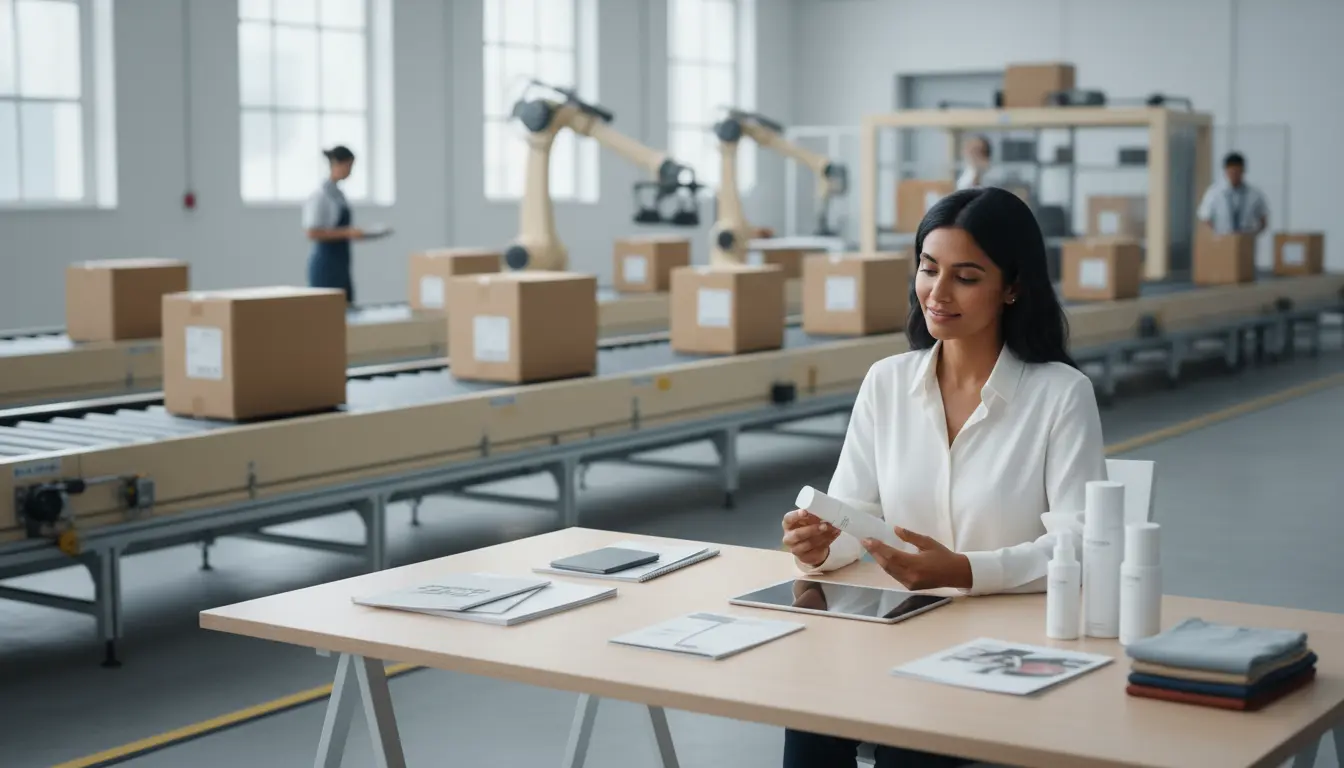
Your competitor sells on Amazon, Shopify, and TikTok Shop, offers fast delivery, and ships nationwide—yet they started years after you. The difference is not luck or bigger budgets. It is access to order fulfillment services for small business that connect brands to enterprise-level logistics without enterprise-level costs.
Many small business owners believe that faster shipping and wider reach require building warehouses, hiring staff, and managing inventory across locations. That assumption keeps strong brands stuck competing on price instead of performance.
Today, fulfillment partnerships quietly changed the rules. Small businesses can now use the same distribution networks, automation, and multi-channel systems that large companies rely on—without building any of it themselves. This guide explains how that works and why it gives small businesses a real competitive advantage.
Why Order Fulfillment Services Are the Great Equalizer for Small Business
A small skincare brand with just two employees can now offer same-day delivery in multiple cities and sell on Amazon, Shopify, and wholesale platforms at the same time. They did not build warehouses or hire logistics teams. They partnered with a fulfillment provider.
In the past, large companies had a structural advantage. They invested millions in warehouse networks, negotiated shipping rates at scale, and built complex technology systems. That infrastructure allowed them to ship faster, cheaper, and more reliably than small businesses.
That advantage is shrinking fast.
Modern fulfillment providers aggregate hundreds of brands under one system. As a result, small businesses gain access to:
- Nationwide and regional warehouse networks
- Discounted shipping rates negotiated at volume
- Real-time inventory and order management systems
- Cross-border and marketplace compliance expertise
This shift allows a small team to compete with much larger companies. Fulfillment partners become the infrastructure behind the brand, removing the need to build everything internally.
What Are Order Fulfillment Services for Small Business? (And How They Level the Playing Field)
Order fulfillment services for small business are outsourced logistics solutions where a third-party provider handles:
- Receiving inventory
- Storing products
- Picking and packing orders
- Shipping to customers
- Managing returns
- Integrating with sales channels
Instead of running a warehouse, hiring staff, and managing software, the business relies on one partner to handle logistics. The brand focuses on sales, marketing, and product development.
Most professional fulfillment services include:
- Warehouse storage and inventory tracking
- Pick-pack-ship operations
- A warehouse management system (WMS) with real-time visibility
- Shipping label creation and carrier rate optimization
- Integrations with ecommerce, marketplaces, and wholesale platforms
- Returns processing and reverse logistics
- Amazon FBA prep and compliance support
- Optional services like kitting, assembly, or quality checks
The advantage comes from scale. Because fulfillment providers serve many brands, they can negotiate better shipping rates, invest in advanced systems, and optimize operations in ways a single small business cannot.
The Core Components of Professional Fulfillment Services
A strong fulfillment partner provides more than storage. They offer:
- Multiple warehouse locations so brands can promise faster delivery
- Real-time inventory tracking for every SKU
- Optimized picking and packing workflows
- Direct carrier relationships that reduce shipping costs by 20–40%
- Automatic order syncing across ecommerce, marketplaces, and wholesale channels
Beyond the basics, quality providers also deliver:
- Inventory forecasting and visibility
- Professional returns handling
- Compliance support for cross-border shipping and retail programs
- Amazon FBA prep services
- Value-added services such as kitting or light assembly
This is a technology-driven operation built to support growth, not a basic storage solution.
The Cost Breakeven Formula: When Outsourced Order Fulfillment Services for Small Business Become Profitable
Many owners ask when outsourcing fulfillment actually saves money. The answer is usually earlier than expected.
Most comparisons miss hidden costs of doing fulfillment in-house, including:
- Warehouse rent
- Warehouse management software
- Labor for picking, packing, and shipping
- Packaging materials
- Time spent managing logistics instead of sales
- Higher shipping rates due to low volume
- Returns handling and inventory errors
With a fulfillment partner, costs are mostly variable:
- Storage fees per unit
- Fulfillment fees per order
- Shipping at negotiated rates
Example Scenarios
50 orders per month
In-house fulfillment often costs close to $2,000 per month once rent, software, labor, and supplies are included.
A fulfillment partner typically costs a few hundred dollars. Outsourcing saves over $1,000 per month.
200 orders per month
In-house fulfillment costs rise quickly due to labor. Outsourcing usually costs less than half, freeing capital for growth.
500 orders per month
Costs begin to narrow, but outsourcing still wins on flexibility, reduced risk, and time savings.
The biggest factor most owners overlook is time. If fulfillment takes 10–15 hours per week, that is time not spent on customer acquisition, partnerships, or product improvements. When that time is redirected to revenue-generating work, outsourced fulfillment delivers both cost savings and growth.
Most brands see clear benefits from outsourcing between 30–100 orders per month, depending on product size and complexity.
The Next Move
Order fulfillment services remove the operational ceiling that slows small businesses. Faster shipping, lower logistics costs, and reliable inventory management allow brands to:
- Expand into new markets quickly
- Sell on multiple channels without inventory issues
- Improve delivery speed and customer satisfaction
- Focus leadership time on growth instead of operations
The companies winning today are not building logistics infrastructure themselves. They are accessing it through the right partners and using it to compete on speed, reliability, and customer experience.
The Next Step
Small businesses no longer need to choose between handling fulfillment themselves or losing control as they grow. A strong fulfillment partner provides the infrastructure while the brand keeps ownership of the customer experience.
If logistics is taking more time than strategy, it is time to reassess. The fastest-growing brands are shifting focus away from packing boxes and toward building better products, stronger marketing, and deeper customer relationships.
Explore how B2C order fulfillment can transform your operation and free up your team to focus on what actually grows your business.
